During my research into the history of the Royal Free Schools I have regularly touched on information relating to the churches in Windsor. This is not surprising as the school was a church school and the churches have played such an important part in the education of children.
I have therefore included some limited information on Windsor churches and links where possible.
David G Lewis “Windsors’s late medieval fraternity of the Holy Trinity”
The following is an extract from A History of the County of Berkshire: Volume 3. Originally published by Victoria County History, London, 1923
There is no mention of a church at New Windsor until the 12th century. The new settlement which had grown up under the walls of the castle probably at first formed part of the parish of Clewer. It is not possible to ascertain the exact date at which a church was built at New Windsor, but by 1189–90 it had outstripped in importance the church at Old Windsor, for in that year Richard I granted ‘the church of St. John the Baptist at New Windsor with its chapel of Old Windsor’ to the abbey of Holy Cross, Waltham. This grant was confirmed by Henry III in 1226–7. A few years later, in 1232, the king directed that tithes from the royal garden should be paid to Windsor Church.
It is strange that the church of Windsor is not mentioned by name in the valuation of 1291, but it has been suggested that the entry of £13 6s. 8d. for ‘the church of Waltham Abbey’ represents the churches of New and Old Windsor, both of which belonged to that house.
The sanctuary enjoyed by this church is mentioned in 1309, when certain refugees from Windsor gaol were recaptured, certain of them being ‘slain and beheaded.’ By the king’s order the survivors were released from prison and taken back to the churchyard.
In 1328 the Abbot of Waltham made good his claim to tithes of the king’s stud in the New Park and this claim was allowed in later years.
At the Dissolution the advowson of the church of Windsor passed with the other possessions of Waltham Abbey to the Crown, with which it has since remained. The rectory and rectory manor were valued at £17 yearly in 1540, and the profits of the manor court were 13s. 5d. The rectory and rectory manor were granted out on lease by the Crown together with the rectory of Old Windsor (q.v.) and both rectories afterwards followed the same descent.
From 15th and 16th-century wills and from other sources it appears that there were many altars in the church besides the high altar. The gild or brotherhood of the holy and undivided Trinity had its altar; a will of 1503 mentions the altars of our Lady of Pity and of St. Clement. Among the lights in the church were the Rood Light, the lights of St. Thomas, St. Clement, St. Stephen, St. Catherine, St. Anthony, St. James, St. George, St. Cornelius, and ‘St. Mary Assumptions,’ each with its two wardens.
The chantry belonging to the gild of Holy Trinity is mentioned first in 1428, when two keepers were appointed. An obit was kept on Trinity Sunday and a requiem mass was sung on the following day ‘for the sowles of all the brethren and sisters of the Trinity brotherhood there.’ Various gifts were made to this chantry by burgesses of Windsor. Thus in 1455 Richard Smith gave half a piece of arable land situated near ‘Spittleborne.’
According to the report of the chantry commission, however, the fraternity or gild of the Holy Trinity was founded by Oliver King, Bishop of Bath and Wells, and one of the secretaries of Henry VII, together with the Dean of St. George’s Chapel and the mayor of the borough, under licence from Henry VII. The object of the fraternity was to support a chantry in the parish church for the souls of the inhabitants of the town; five obits were to be sung yearly and alms were to be distributed to the poor. At the date of the dissolution of the chantries this fraternity owned land and tenements in Windsor valued at £19 4s. 4d. yearly. The priest’s stipend was £7 6s. 8d., and he taught a grammar school, ‘wherof that town hathe great need.’ Alms to the poor amounted to 41s. 6d. per annum. In addition the fraternity undertook the repair of certain bridges, ‘Swaines Bridge, Tayntershuche Woode Bridge, and Frogmore Bridge.’ It was reported that the town contained 900 or more house-holders, and as the vicarage was only worth £8 a year a suggestion was made that part of the income of the fraternity should be annexed to the vicarage.
A petition presented to King James as patron of the living, that a canonry in St. George’s Chapel should be annexed to the vicarage of New Windsor, owing to its poverty, having failed, Charles I granted it a fellowship in Eton College. The vicar now receives an annuity from the capitular funds of St. George’s.
On every alternate Sunday morning, when there was no sermon at the parish church, the congregation were accustomed after morning prayer to go up to St. George’s Chapel to listen to the sermon there. Allusions to this custom are often found.
The parish church was plundered by the Cromwellian soldiers, and the new organ was taken down and sold for the price of the metal and wood of which it was built. The church plate escaped, as it had been sent by the churchwardens for safe custody to the gildhall.
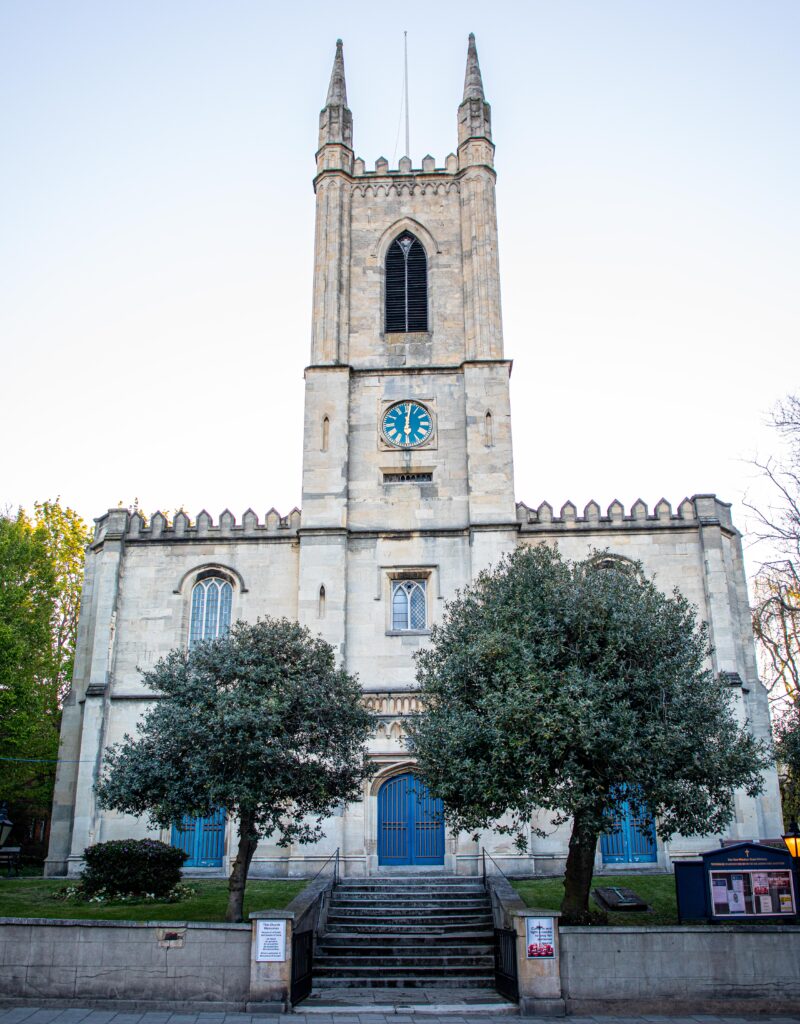
During the early years of the 19th century the fabric of the parish church was in need of constant repair. In 1815 it was reported that ‘all the external parts of the church were in a very dilapidated state, including the Tower and Belfry.’ Extensive repairs were undertaken, but several surveyors declared that it was impossible to maintain the existing structure, and in 1818 it was decided that the church must be rebuilt. Thus the old structure was pulled down, the first stone of the present church being laid in 1820. The new building was opened in 1822; £5,000 of the whole cost of £14,000 was raised by subscription, the remainder was borrowed on the security of the rates and was not paid off until 1839.
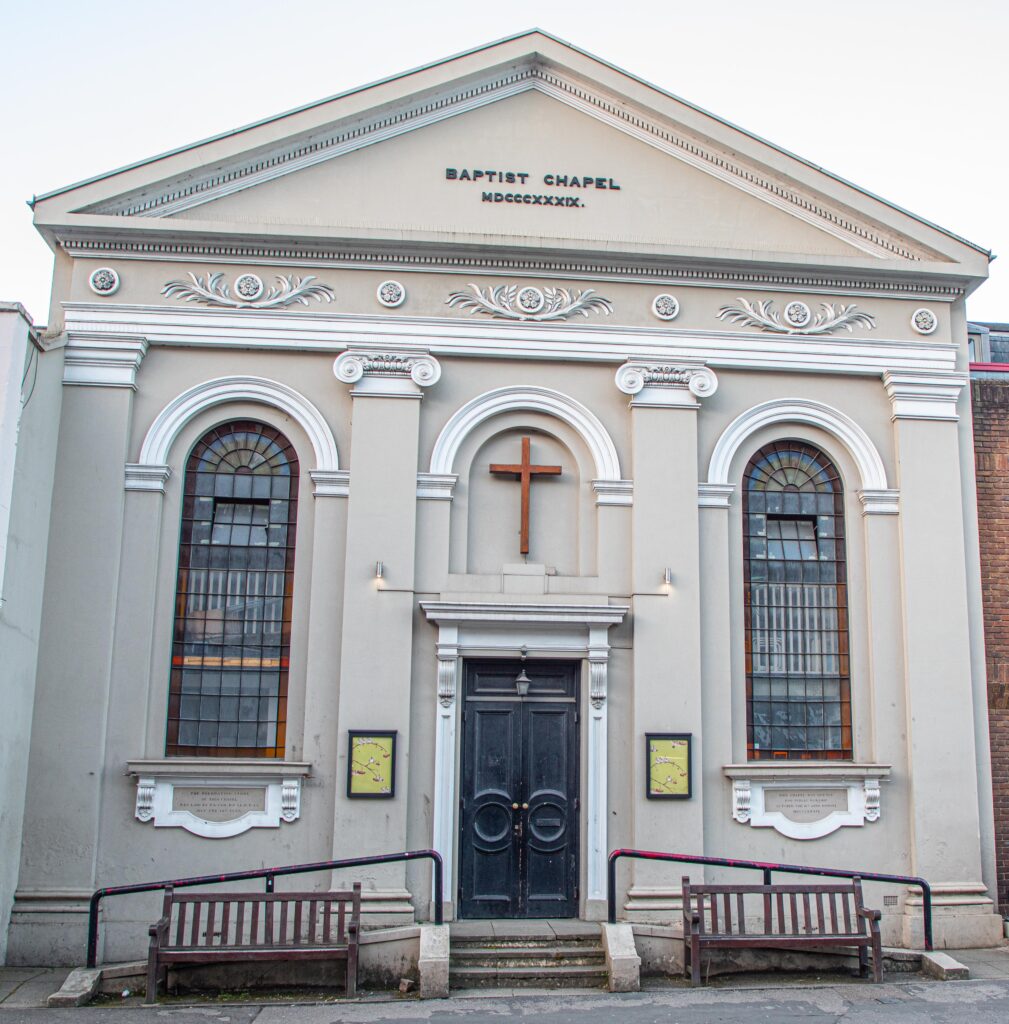
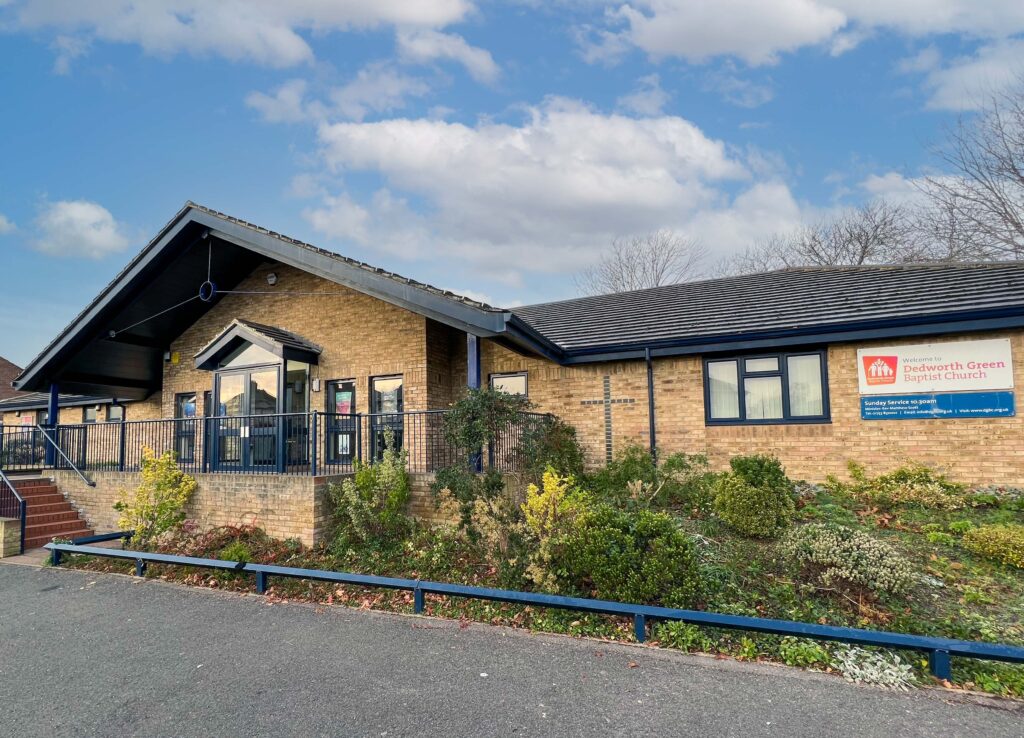
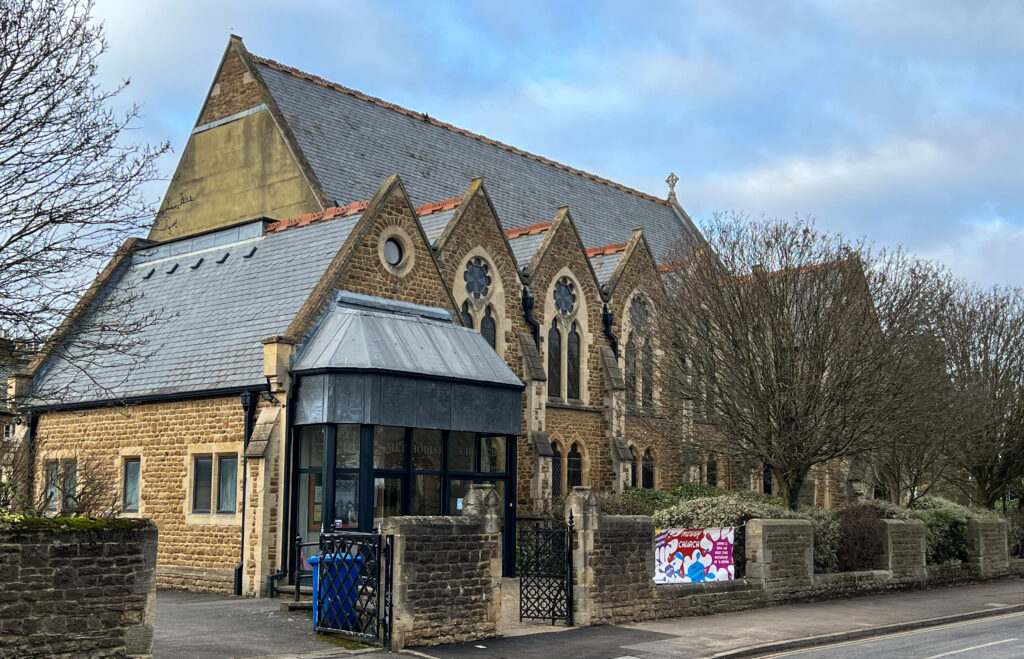
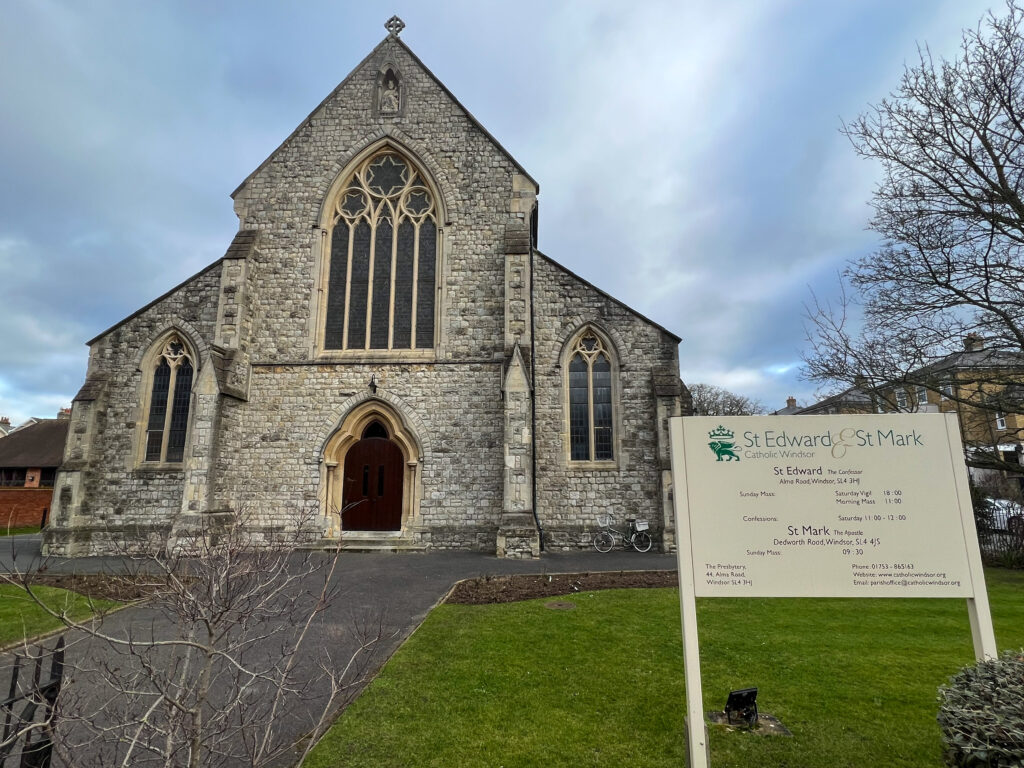
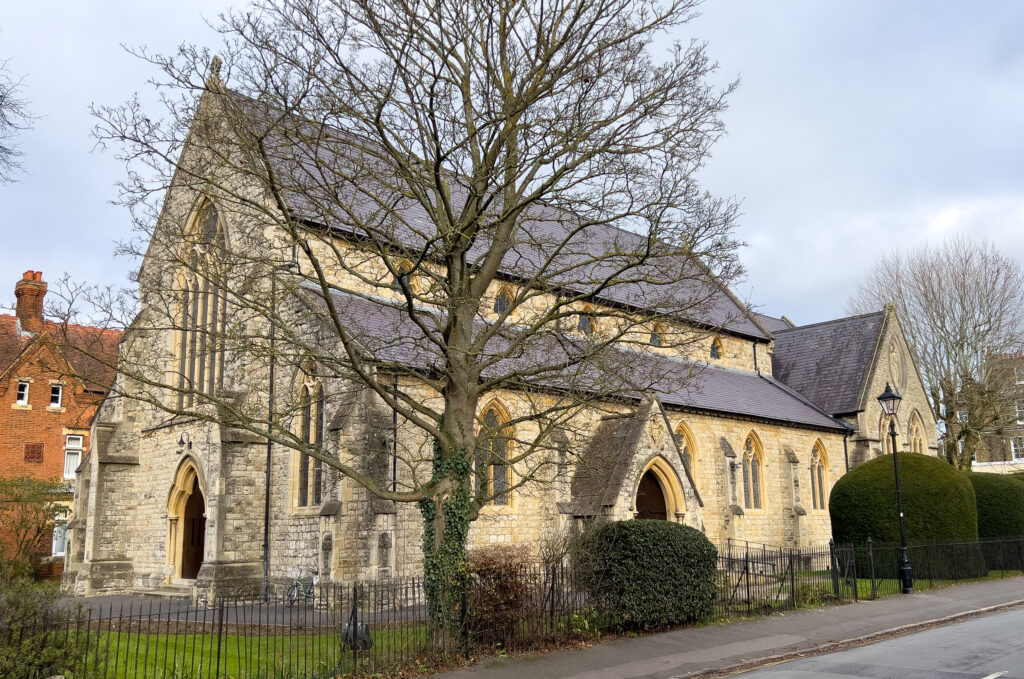
The places of worship belonging to Nonconformist bodies are the Roman Catholic church of St. Edward in the Alma Road, the Wesleyan Methodist chapel, also in Alma Road, built in 1876–7, the Congregational chapel in William Street (1832), two Baptist chapels in Victoria Street (1838) and in Adelaide Square (1881), the Primitive Methodist chapel in Denmark Street, and the two chapels of the Brethren, one in Sheet Street and the other in St. Leonard’s Road.