A Brief History of Windsor Dispensary, Infirmary and Hospital
Based on The Hospital at Windsor by J E McAuley
Edward Hawke Locker born in Kent, educated at Eton, retired from his post in the Navy in 1814, married and moved to live in the Castle Cloisters Windsor in 1815.
On December 29th, 1817, Locker published an address in which he pointed out the utter inability of the labourer to set aside money for medical care.
“Accidents, unwholesome trades, excessive exertions, or want of proper food and clothing, produce disorders which suspend his work, and cut off the only source of his earnings … Many a poor man patiently conceals his sufferings in the gloom of his cottage, and silently broods over his sorrows, with no other witness to the disease that wastes him than the starving family around him.”
“To provide the labouring classes in future with proper attendance and medicines free of expense, and to afford their superiors a new channel for their bounty, it is proposed to establish in Windsor a General Dispensary, of which a Plan is now prepared for public approbation.”
Locker knew of many cases of sickness among the poor, in which the inhabitants of Windsor had assisted with food, clothing and money, and he was sure “that the same generous feeling, extended to a wider field of benevolence, will raise a sum, by annual voluntary contribution, fully adequate to the purposes of a charity so highly advantageous.” He concluded “Let not the sick, the needy, the afflicted, appeal in vain to their more prosperous neighbours. Let us multiply our claims to their regard by every act of kindness we have the means to bestow. And as Institutions for the relief of the distressed, the consolation of the helpless, the instruction of the ignorant, and the diffusion of Christian knowledge, arise throughout the land, they will powerfully plead to heaven for ourselves, and tend to secure to us those public blessings which so eminently distinguish this favoured nation.”
On Wednesday, the 14th January, 1818, a Meeting of the Nobility, Gentry, and other Inhabitants of Windsor and its Neighbourhood was held at the Townhall, with Edward Disbrowe, Esq., M.P. in the Chair. “Proposals for Establishing a General Dispensary for the Relief of the Sick Poor of Windsor, Eton, and the Vicinity, were submitted to the Meeting by Edward Hawke Locker, Esq …. (it was) Resolved: “That a General Dispensary be instituted accordingly and that the regulations he has proposed be adopted for the government of the Charity”
Major-General Herbert Taylor, Private Secretary to Queen Charlotte, announced that Her Majesty and the Royal Princesses Augusta, Elizabeth and Sophia had graciously consented to become Patrons of the Institution, and would open the subscription list with the Duke of York, then High Steward of Windsor. The Earl Harcourt, Deputy Ranger of Windsor Park, was elected President with eight Vice-Presidents including the Dean of Windsor, Provost of Eton, and the two M.Ps. for Windsor, Edward Disbrowe and John Ramsbottom. A Committee of fifteen included Locker and the Mayor, with John March of Eton as Treasurer. Among the first subscribers to the Dispensary were George Ill’s physicians, William Heberden and Robert Willis.
At at general meeting of the Governors on 4th March 1818 the regulations for the Dispensary as drawn up by Locker were adopted. The Institution was to be “supported by the voluntary contributions of the Nobility, Gentry and other Inhabitants of the Neighbourhood. Each subscriber of One Guinea per annum shall be constituted thereby a Governor of the Charity, and entitled to have one Patient on the Books at a time, and so in proportion for every additional Guinea subscribed within the year; but the smallest contributions below that sum will be thankfully received.”
Tickets were issued for signature by the Governors when given to patients. No one would be eligible who could afford medical treatment at their own expense, but this did “not exclude from the Institution the servants of such subscribers as are below the degree of Gentry”. Patients were expected to come provided with phials and gallipots for medicaments, and bandages if required; or these could be hired from the Dispensary.
The medical staff consisted of the Consulting Physician, Dr. Stewart of Park Street, three Surgeon-Apothecaries, Messrs. John O’Reilly, John Chapman and William Rendall, and a resident House Surgeon-Dispenser.
The Physician was to act mainly in a consulting and advisory capacity, and to visit the Dispensary whenever he deemed it necessary. The Dispensary was to be open for the reception of patients on three days a week between 9 and 11 o’clock, when the visiting Surgeons were in attendance in rotation with Mr. O’Reilly on Tuesday, Mr. Chapman on Thursday, and Mr. Rendall on Saturday. They were also to attend patients in their own homes, who were unable to come to the Dispensary. When a surgeon was unable to visit such patients this was to be done by the Dispenser. He also was to render treatment in all cases of accident or emergency with or without a ticket, but the patient was to be put under the care of the Surgeon next on duty.
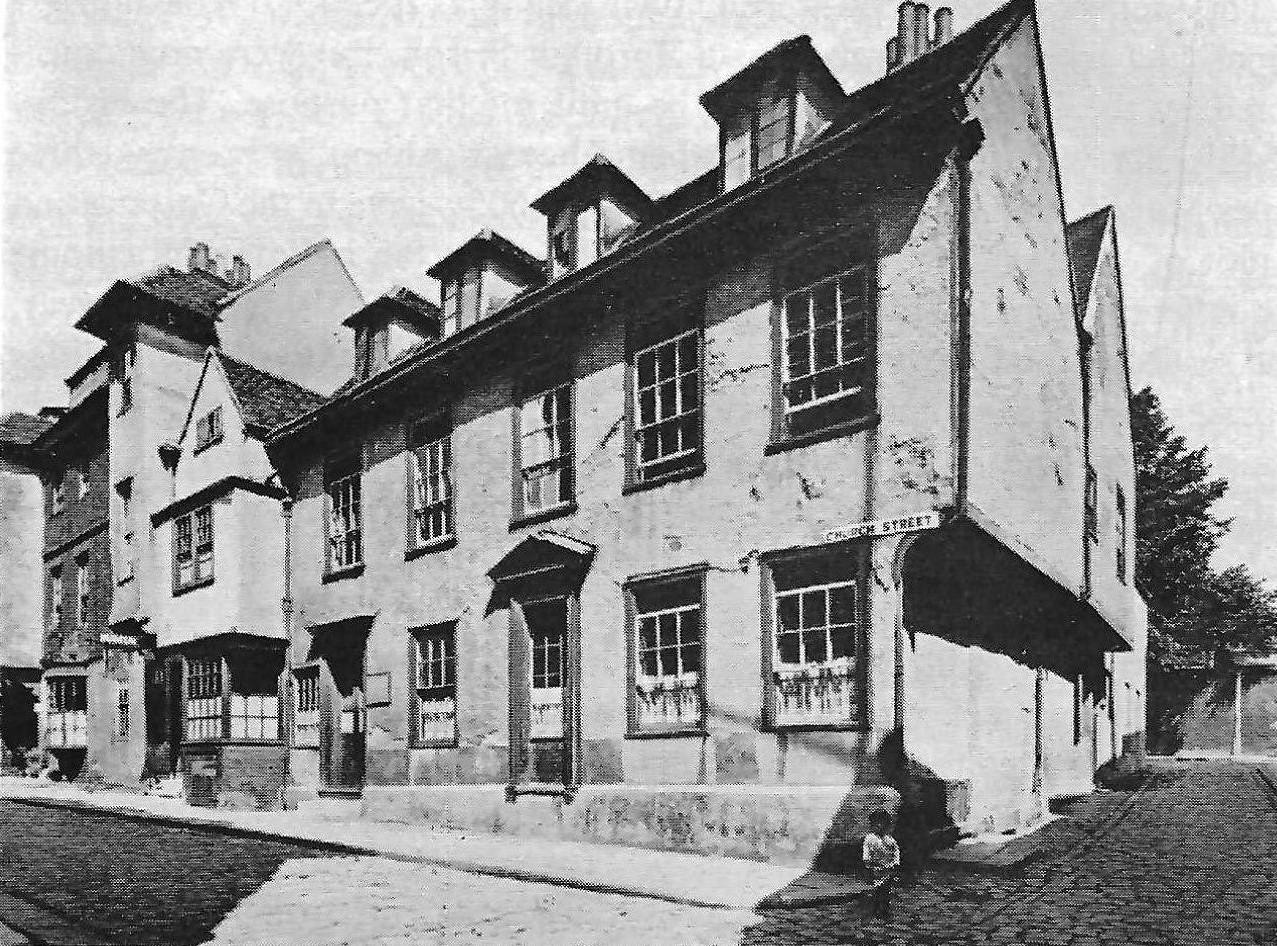
A house was obtained in Church Street close to the Castle. The Dispensary opened on Tuesday, 10th March, 1818, but in August a letter was received from a Mrs. Morris, who conducted a school in the house facing the Dispensary, stating that she had lost several pupils “in consequence of the prejudice entertained by the Parents of her Scholars to the vicinity of the Dispensary”. It appeared that the adjoining house was to let, and as the present building was considered by the Medical Officers to be inadequate, they proposed that it should be rented by the Committee and the Institution transferred to it. The move was completed by the beginning of October, but whether this proved of any benefit to Mrs. Morris or her school is not known.
From the outset the Committee were eager to encourage the public to be vaccinated against Smallpox, The Dispenser was instructed to vaccinate gratis any applicant, but the public on the whole, due to ignorance or indifference, was reluctant to accept this offer.
The number of cases of all types treated at The Dispensary ranged between 1,000 and 2,000 each year, and no marked increase occurred until the mid 1830s, when with Geoffrey Pearl as House Surgeon, began to be accepted patients without tickets.
The yearly figure rose rapidly to over 4,000 but then remained fairly constant for some time. The Committee considered that this was due to the unwillingness of the Medical Officers to refuse patients without tickets. It was decided that the original rule should be enforced, but that the allocation of tickets to subscribers should be· doubled. Nevertheless applicants without tickets continued and many of them were accepted.
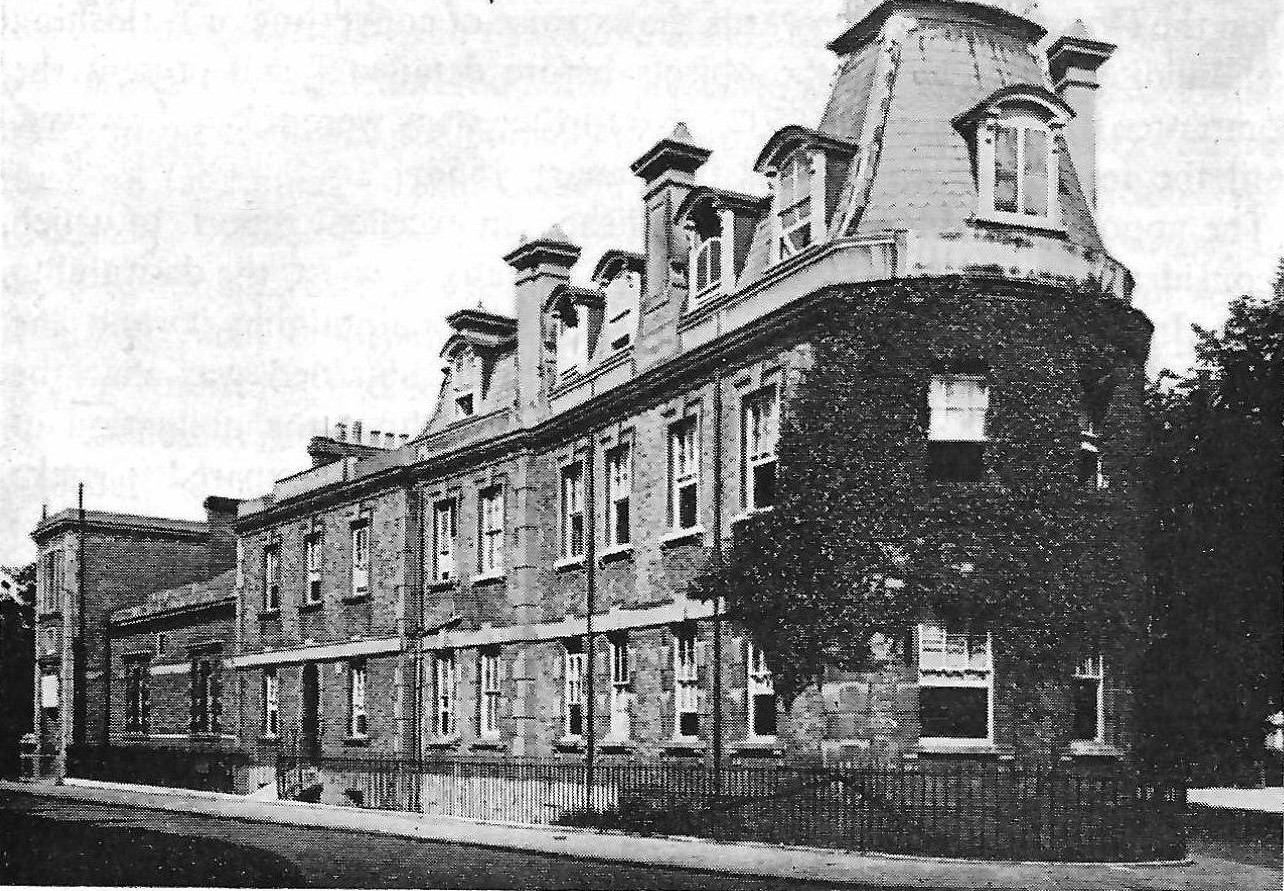
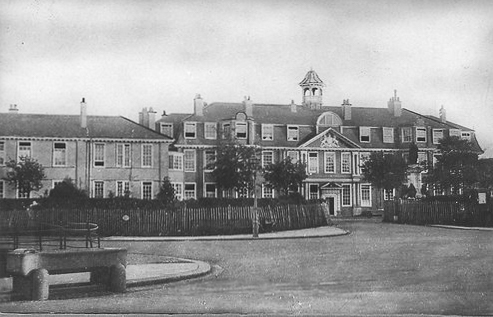
By 1832 the need for more spacious accommodation became apparent and in 1832 a bequest of £500 was received from the estate of Mary, Countess Harcourt, widow of the first President of the Dispensary, and who had died in 1830. He was succeeded by the Duke of Cambridge, brother of George IV and High Steward of Windsor. With the above-mentioned bequest the Committee felt that there were sufficient funds to justify obtaining a larger building, and a resolution to this end was passed at the Annual General Meeting on 30th January, 1833. A special meeting was held on 27th February, and a Building Committee was formed. A plot of land which lay at the apex of a triangle formed by New Road (now Victoria Street) and Bachelors Acre was purchased for £150. The Acre, previously known as Pitt’s Field, was used for sporting events and festivities. It would appear that the Windsor Savings Bank had acquired the adjacent site, and they had agreed that their building should be uniform in design with the new Dispensary. A joint tender for the two buildings was submitted by Mr. Bedborough, a member of the Committee, and this was accepted. It may have been hoped that at some time in the future the Bank premises might be incorporated with the Dispensary.
The new Dispensary was completed by the middle of 1834, and was occupied in July. Both in situation and accommodation it was a vast improvement on the premises in Church Street. It was announced at the next Annual General Meeting held in the Committee Room of the new building, that plans had been prepared for the addition of an Infirmary, and while it was realised that this could not be undertaken at present the plans would be available for inspection.
In 1835 at the bequest of the will of Mrs. Catherine de la Vaux of Datchet, £1,000 for the establishment of an infirmary in Windsor. The sum was to become payable on the death of her nephew Mr. Padmore De Ia Vaux and his wife, who were then living in South Carolina.
During the next few years, the project was kept before the Committee and the Subscribers, and the relevant extract from Mrs. De. la Vaux’s will was printed at the back of all the Annual Reports. An Infirmary Fund was opened by the donation of £43 14s. 0d. by the Rev. James Chapman. After a slow start the fund had risen to £1,142 by 1846, with the promise of further liberal support once the plan was approved. Throughout the year the matter was heatedly debated by the Committee. The main point of opposition to building an infirmary was the lack of income to support it, and the Dispensary had in fact been faced with an annual deficit for the previous five years. A special meeting of the Committee and Subscribers was held on 12th November to vote on the resolution: -“That all idea of carrying out the Scheme for an additional Ward be for the present abandoned.” The issue had now narrowed itself to the construction of a single Casualty Ward. An amendment was put forward by Geoffrey Pearl, recently appointed a visiting Surgeon, and seconded by Joseph Sharman, the Treasurer.
In 1855 information was received that Mr. F. Padmore De la Vaux had died, and the Committee was faced with the alternative of waiving their contingent claim to the £1,000 legacy under the will of Mrs. De la Vaux, or applying for the bequest and taking the necessary steps to establish an Infirmary. The will stipulated that if an Infirmary was not in existence in Windsor within five years, the aforesaid £1,000 Consols were to be paid to St. George’s Hospital, London. At the Annual General Meeting on 30th January, 1856, it was resolved: “That a Committee be appointed to make careful inquiry into the possibility of applying the Bequest of Mrs. De la Vaux to the maintenance of an Infirmary in certain Premises belonging to the Town, and originally given for the purposes of an Hospital”.
The premises mentioned was the “Old Workhouse,” which had recently been used as a Borough Prison, but were now considered by the Prison Inspectors to be unfit for that purpose. In 1841 a new Poor Law Institution was built elsewhere, and the Committee applied to the Town Council for use of the site and the building as an Infirmary, but the Council were unable to accede to their request as they were going to use it as a gaol.
The appointed Sub-Committee published an excellent report, in which it considered in detail the terms of the De la Vaux Bequest, the desirability of an Infirmary, the cost of establishing and maintaining it, and the possible sources of income. The legal opinion obtained was that the Dispensary as such could claim the bequest without the obligation of establishing an Infirmary. The Sub-Committee was not prepared to make any recommendations but left it to the next General Meeting to make the decisions. There was still considerable difference of opinion among the Committee on the need to establish an Infirmary, but after two General Meetings held on 15th October and 4th November 1856, it was resolved: “That an Infirmary be established in connexion with the Dispensary. That there be two wards with an average of eight beds and that the Committee be requested to take immediate steps for obtaining possession of the old Workhouse”.
Formal application for possession of the Workhouse was made to the Mayor of Windsor, who at that time was Geoffrey Pearl. The Council although anxious to help had not the power to comply with the Committee’s request, as it now appeared that the property was under the jurisdiction of the Charity Commissioners. The Committee applied also to the Executors of the De la Vaux estate for payment of the bequest. They in turn notified the Governors of St. George’s Hospital, and their Secretary promptly contested the claim, pointing out that The application for payment of that sum appears to be premature, the Institution not having been erected nor even commenced”. All of which no doubt influenced the Committee to ask the next Annual General Meeting on 28th January, 1857, for authority to make additions to the present Dispensary, because of the difficulties of acquiring the premises in Sheet Street.
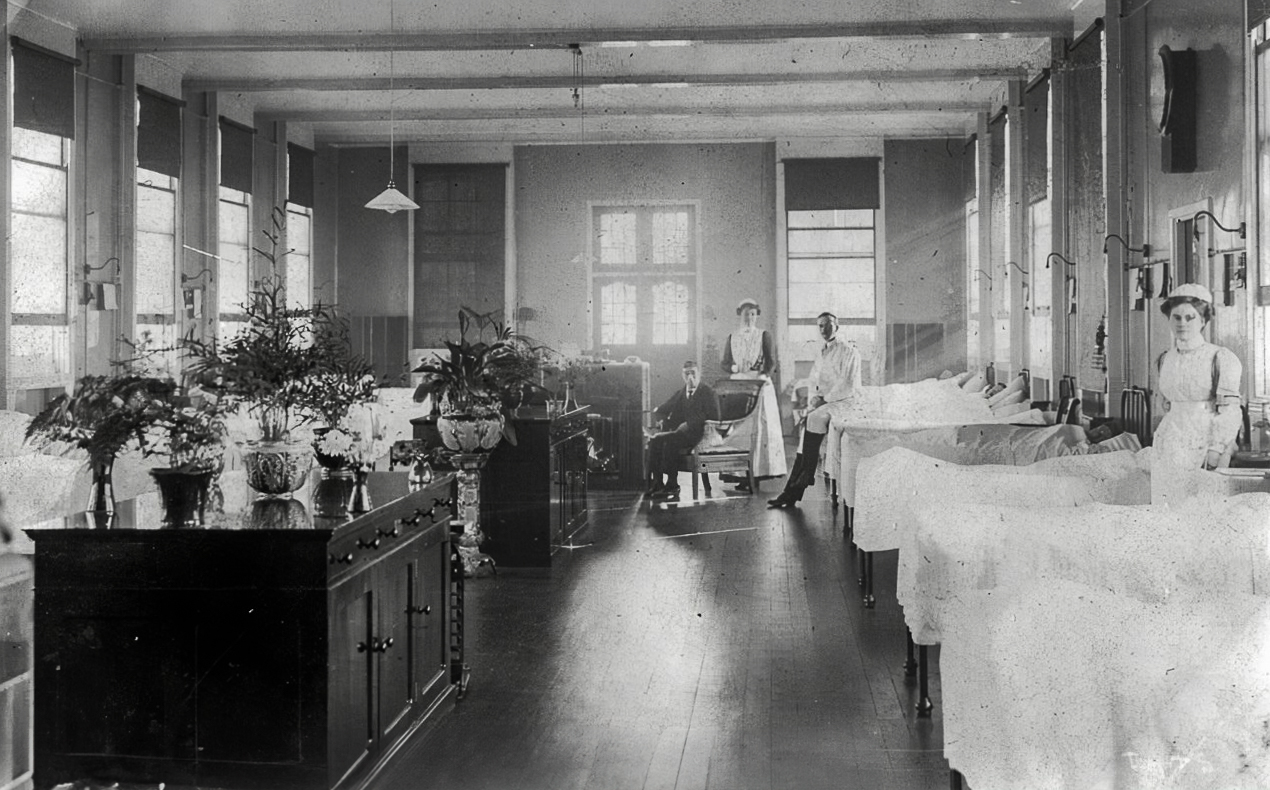
The Meeting supported the proposal and agreed that steps should be taken immediately to proceed with the building of the Infirmary. A Building Sub-Committee which included the Medical Officers was appointed. Donations came in rapidly, and by the end of the year amounted to £1,398, but further alterations and furnishings brought the total cost of the Infirmary to nearly £1,688. The new building contained one male and one female ward, an operating room, a new Board Room and Staff quarters. There were fixtures for the supply of gas-the Dispensary itself had had gas lighting since 1852. Caley Brothers donated counterpanes for all the beds. The Staff was temporarily increased by an Assistant Dispenser, but a permanent appointment was not made until 1862. A Head Nurse was also engaged.
The Infirmary was open to receive accidents from 1st December 1857, but in fact a case of fractured femur was accepted at the end of November, and a nurse employed temporarily at 2/- per day. It was formally declared open on 1st January 1858. Certain amendments to the Regulations were necessary, including the rule: “No woman advanced in pregnancy, no child under six years of age (except for operations, or in cases of severe recent accident or peculiar emergency) no person of unsound mind, or having confirmed bad legs, having or being suspected to have the small pox, scarlet fever, measles, Asiastic cholera, or infectious or contagious disorder, nor any person apprehended to be in a dying condition, nor who in the opinion of the examining physician or surgeon, might receive equal benefit as an out-patient, shall be admitted as an in-patient.” Included later were cases of confirmed consumption, epilepsy and primary venereal symptoms.
In conducting the Dispensary alone no great difficulty had been experienced in making ends meet, but after the opening of the Infirmary finance became a never-ending problem for the Committee. Further application for the De la Vaux bequest had still met with opposition from St. George’s Hospital and the Trustees under the Will transferred the £1,000 Consols to the Court of Chancery. A petition was made to the Accountant General, and the Master of the Rolls eventually made an order in favour of the Infirmary. This all increased the legal costs, and these together with legacy duty reduced the bequest to £847 2s. ld., which was paid in February 1859.
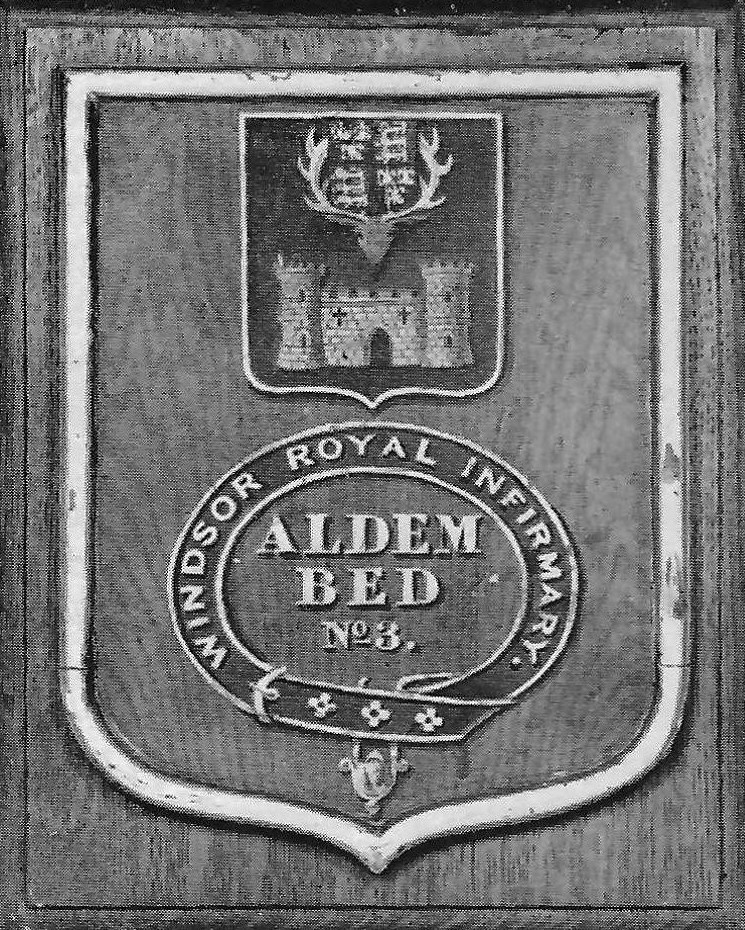
Thomas Aldem’s Charity sponsored four beds. Four beds were to be set aside and maintained for the exclusive use of residents of New Windsor, each bed to be labelled “Aldem Bed.” In the case of a severe accident arriving at the Infirmary when all other beds were occupied, a vacant Aldem bed could be used whether or not the patient was a resident of Windsor.
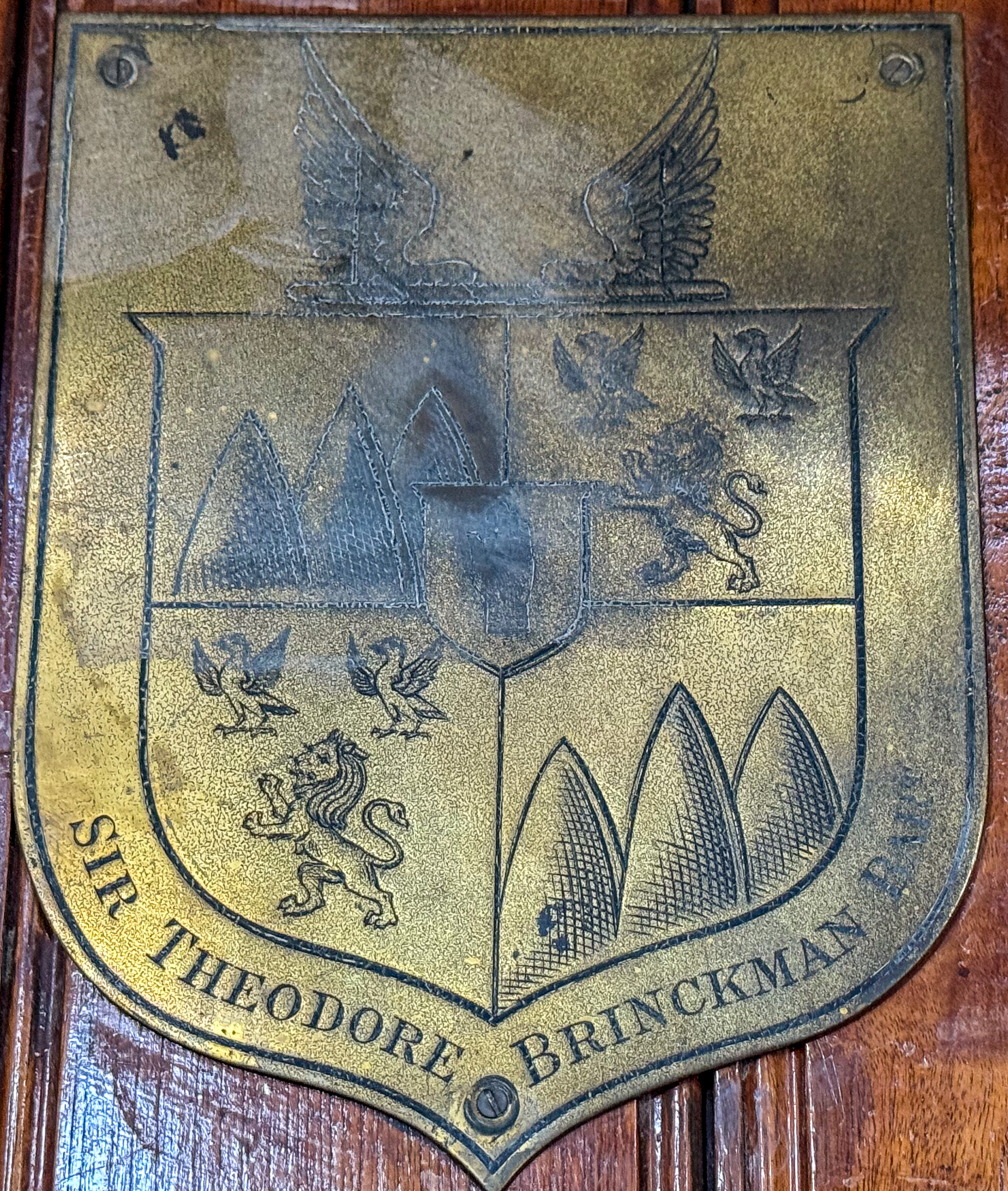
The Committee of the Infirmary were to consent to these conditions within three months, and to agree that three of the Aldem Trustees should annually be appointed to serve as ex-officio but full members of the Infirmary Committee. That the Committee not only accepted these terms, but were anxious to please the Aldem Trustees is evidenced by a resolution passed in August 1861. “That the beds selected as Aldem Beds be those in each ward which stand either side of the fire-place-such a position being deemed to be most comfortable and free from draught.” It was also decided that in the Register of In-patients, it should be indicated which patients occupied the Aldem Beds. The annual income derived from the Trust was between £30 and £40, although the Infirmary did not begin to receive this until 1863. Two of the Aldem crests are still to be seen outside the Board Room of King Edward VII Hospital.
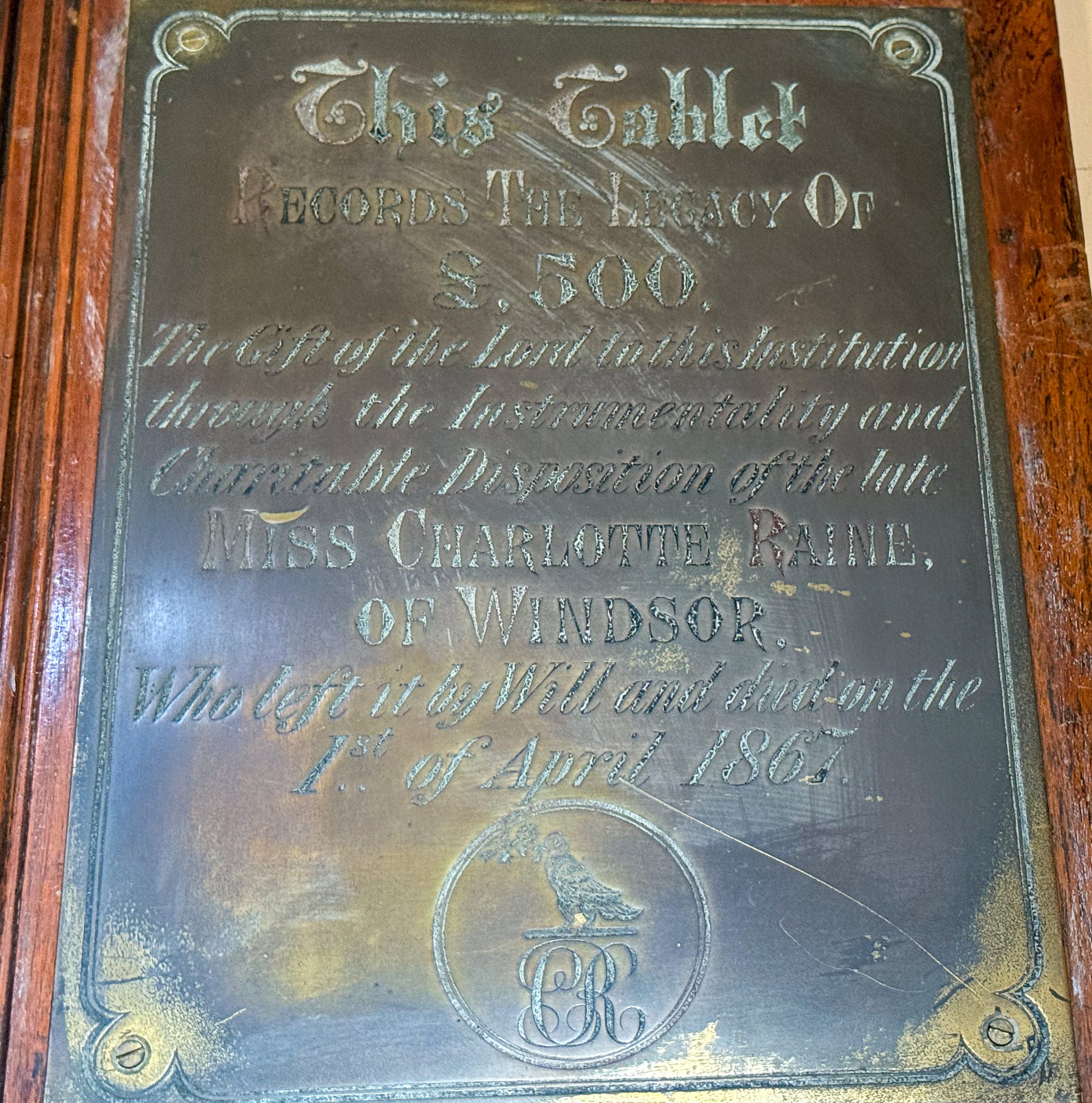
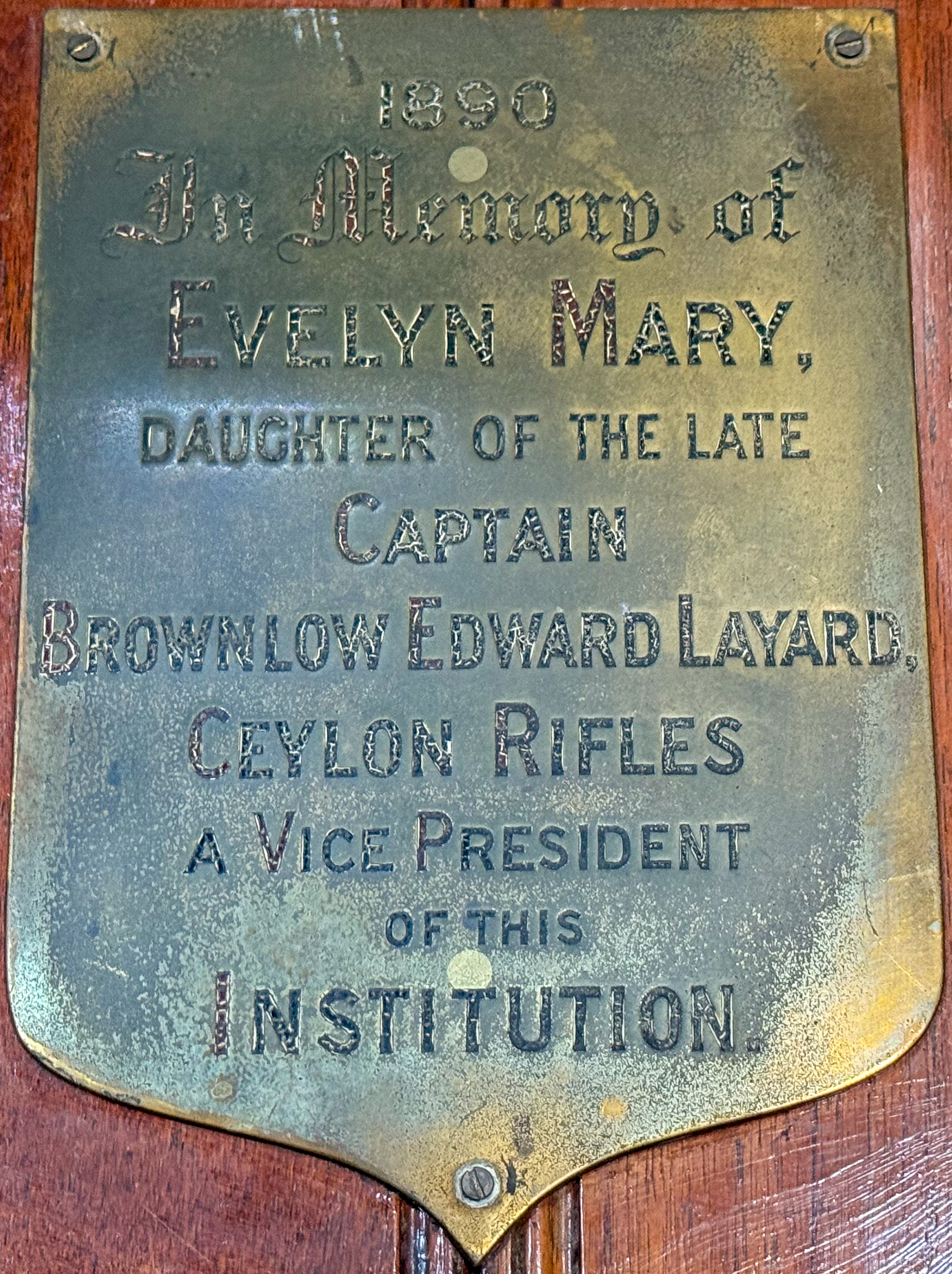
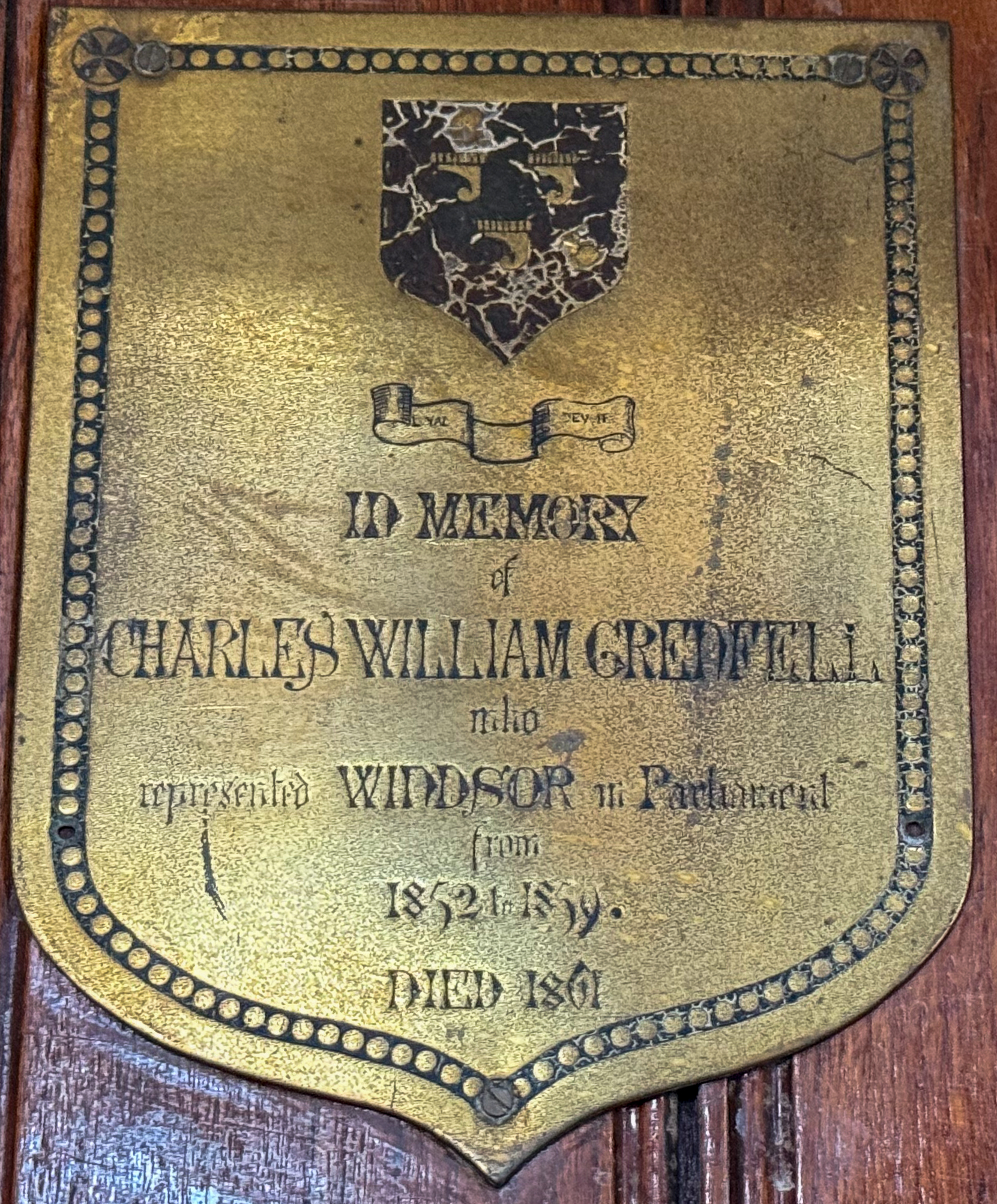
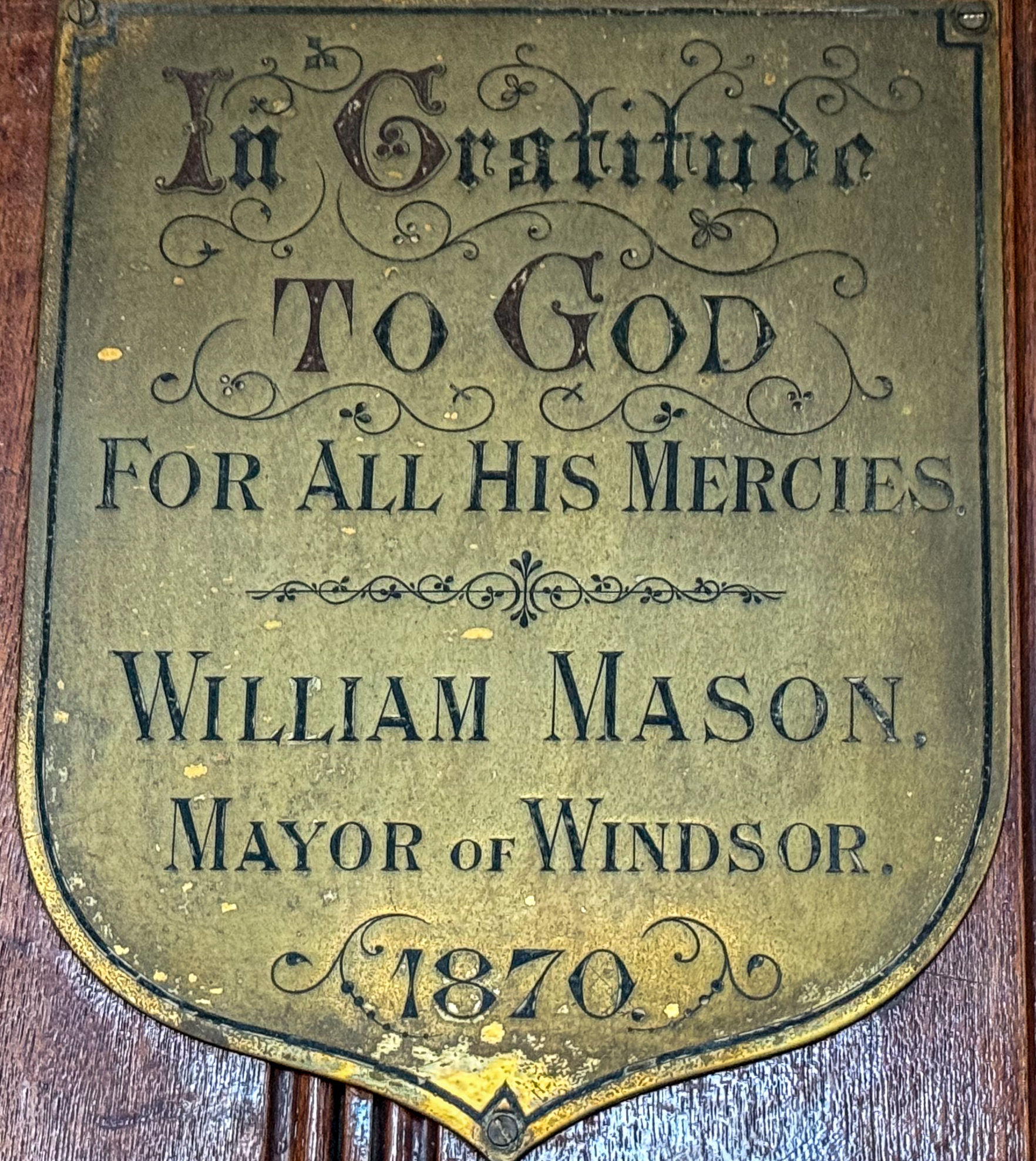
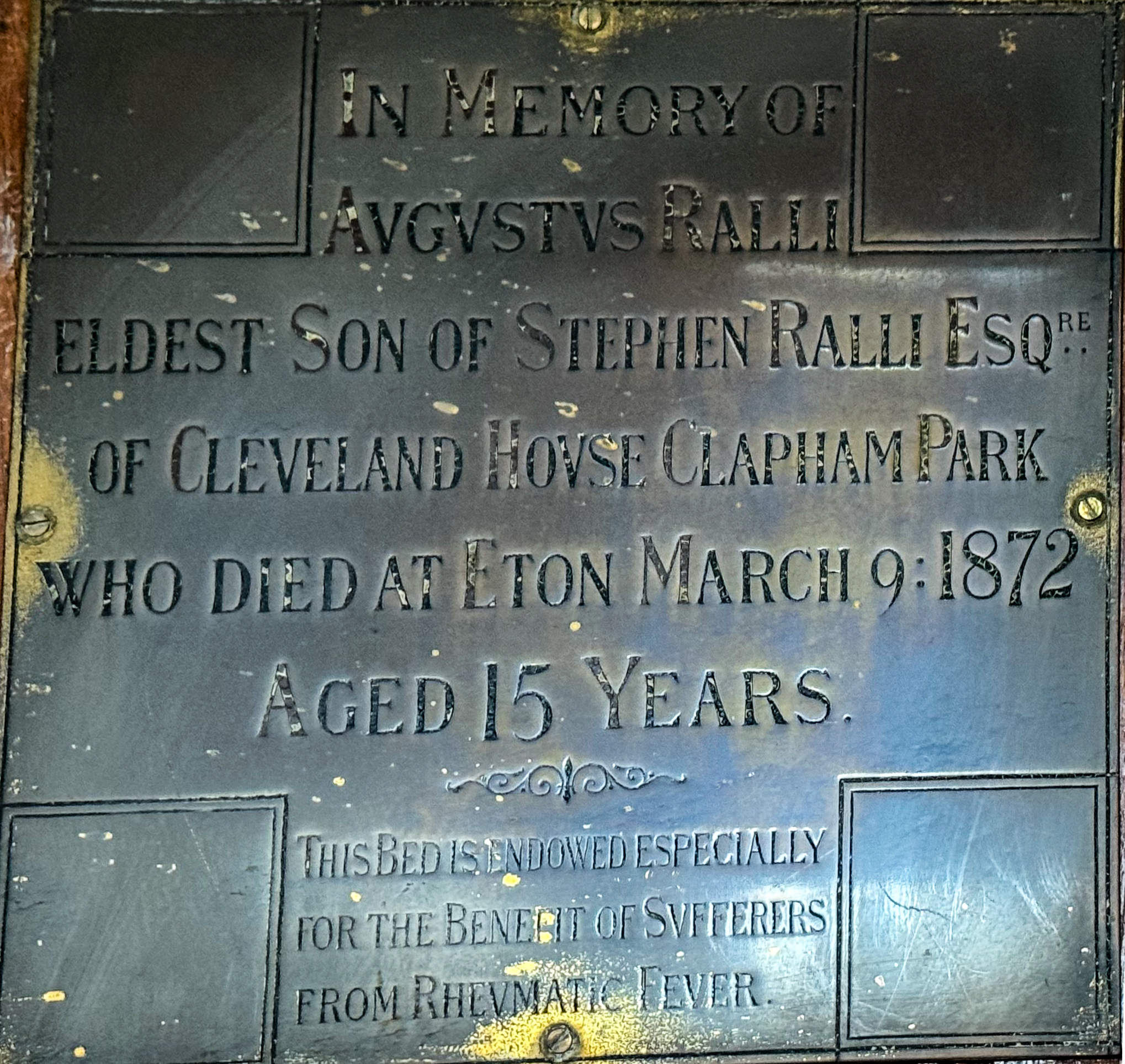
For many years a form of legacy was printed in the Annual Reports to encourage “such as are inclined to become benefactors”. Donations were also invited by allowing donors of 50 guineas or over the privilege of adopting a bed “Over which their crest or motto could be affixed”. Mrs. C. G. Grenfell, of Taplow Court, was the first of many to do so: “In Memory of Charles William Grenfell, who represented Windsor in Parliament from 1852-1859. Died 1861”. This plaque with several others can still be seen alongside the main staircase of the present Hospital.
The clergy of the parishes in the district instituted an annual collection at their churches during a service in which a special sermon was preached, emphasising the needs: of the Infirmary, and extolling the virtue of contributing to such a fund. Many schemes for collecting donations from the poorer members of the community were organised. The most successful and permanent of these was the “Windsor Hospital Saturday”, which began in 1884 and combined street and house collections. An earlier scheme was the Bexley Street Dispensary Association, by which every house in that street annually subscribed one shilling, and for a few years it produced an income of three guineas, thereby providing six Dispensary tickets for the use of the residents. Collecting boxes were placed in Working Men’s Clubs, Reading Rooms, hotels, public houses and shops, with varying results.
The premises of the Windsor Savings Bank which adjoined the Infirmary had become vacant, as its business had been taken over by the Post Office. The Committee felt that they should purchase the premises to avoid them passing into unsuitable hands, and also that they might in the future be adapted for extension of the Infirmary. The price agreed was £950, the sum had to be borrowed, but fortunately the building was let to the Vicar of Windsor for use as a school.
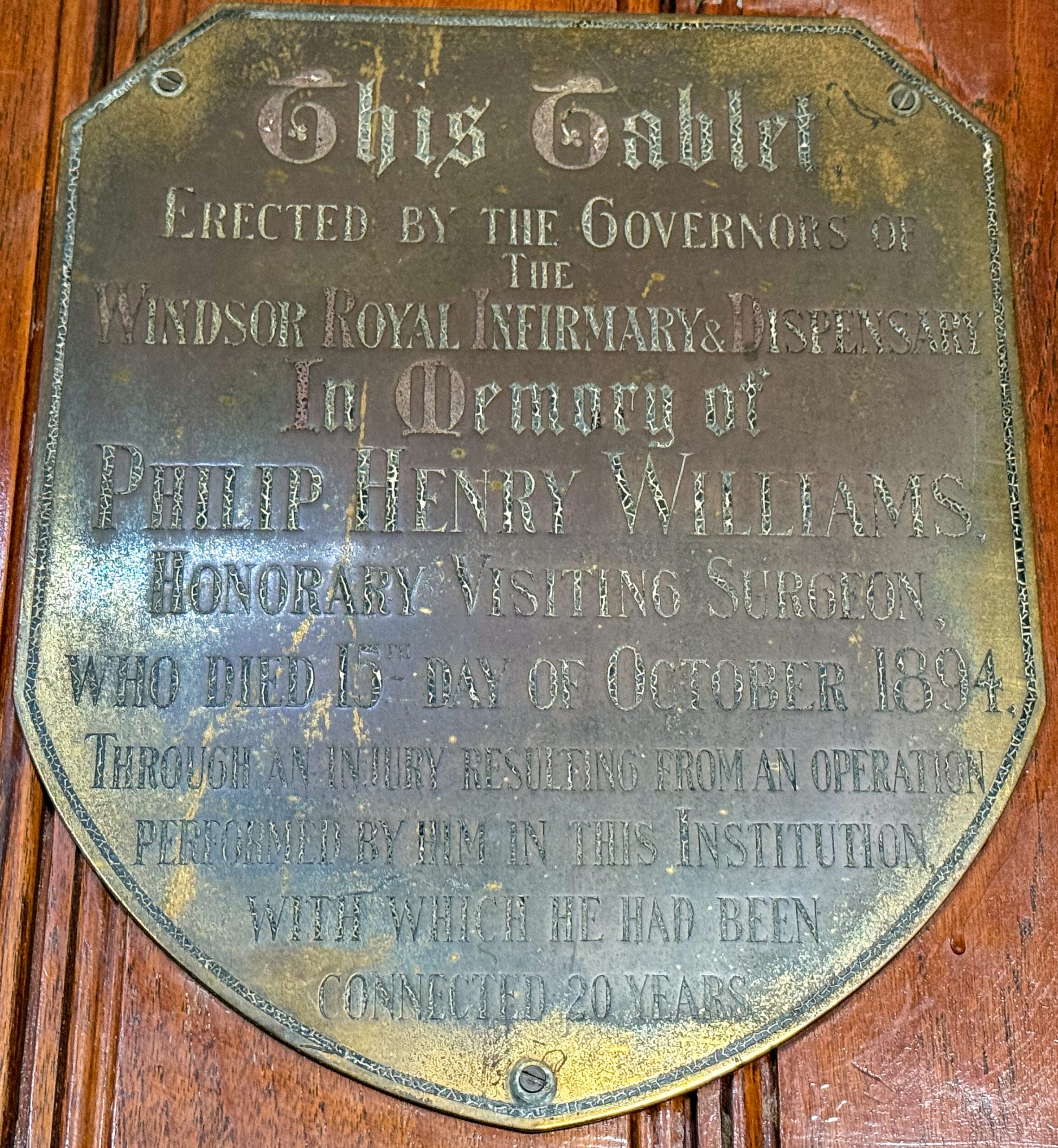
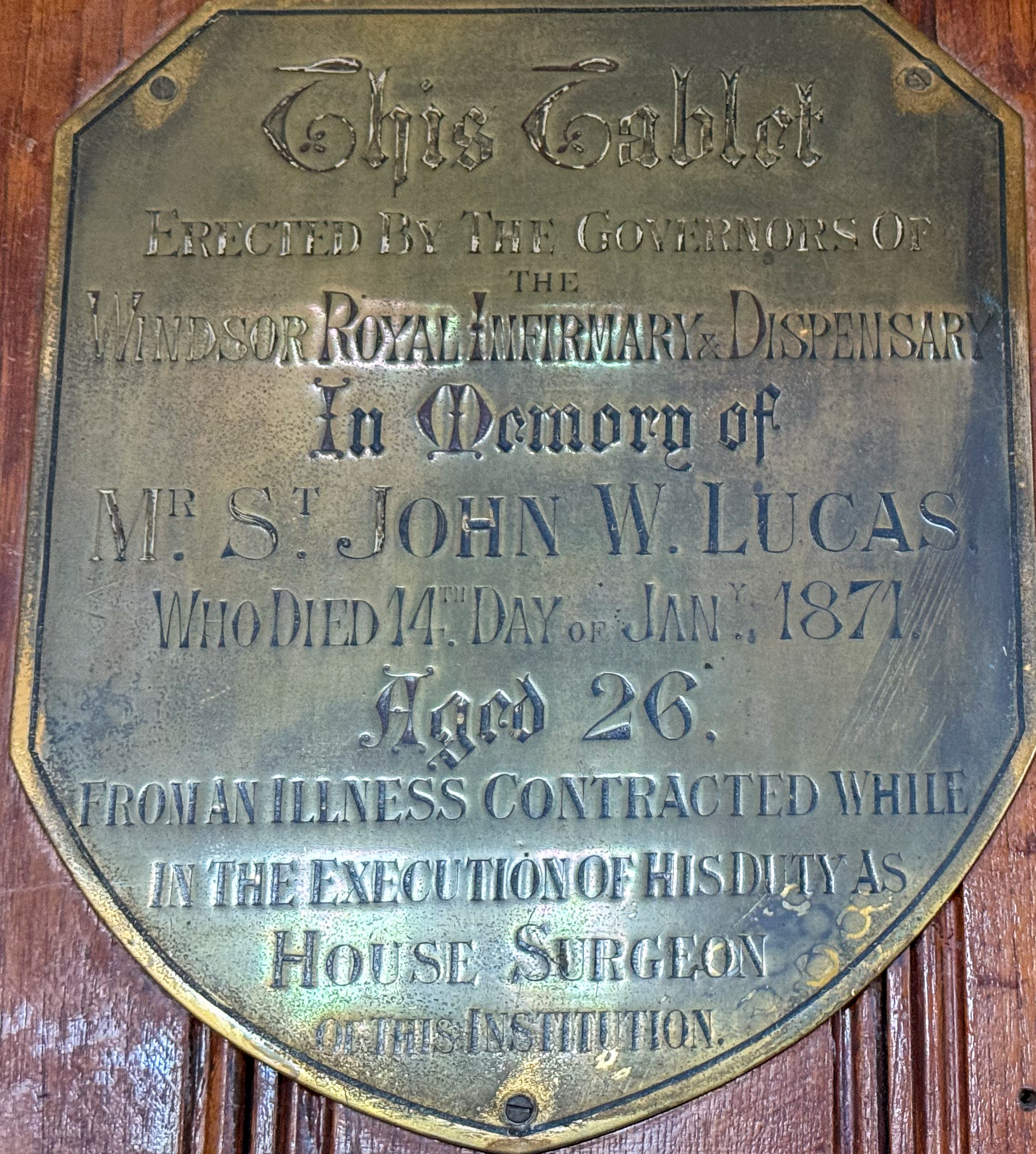
In 1872 the bank loan was repaid and it was proposed by John Hibbert Vice-President of the committee that they should be converted into two Convalescent Wards, one for each sex, and together containing ten beds. He announced that he would bear the cost himself of the necessary alterations, for which the final figure proved to be £1,500. It was estimated that the maintenance of these wards would be £300 per annum, and towards this Queen Victoria donated £187, and other donations soon brought the fund to over £400. The new wards were opened on 1st May 1873, by Prince and Princess Christian of Schleswig-Holstein, and from the Prince’s speech it would appear that such an amenity was rarely provided in other hospitals for those “still unfit to return home and resume their ordinary occupations”. In recognition of this magnificent gift the Committee presented Hibbert with a Memorial, and ordered a tablet to be erected in the Men’s Convalescent Ward as “A Tribute of Gratitude by the Governors of the Windsor Royal Dispensary and Infirmary”, which is still to be seen in King Edward VII Hospital. Subscribers of two guineas or more were allowed to exchange their six Dispensary tickets or their Infirmary Letter for a Convalescent Letter to permit a patient to have a period in a Convalescent Ward. On the recommendation of a Medical Officer a patient in a general ward could be transferred for convalescence before discharge.
In 1875 Henry Ellison, Vicar of Windsor, retired and left the district, and John Hibbert succeeded him as Chairman of the Committee. he continued in this capacity until his death in 1888. An additional storey was built in 1881, which provided six new rooms and greatly improved the exterior appearance of the Infirmary. The total cost of the extension was £663, to which Hibbert contributed £400.
In 1884 the Queen asked her personal physician Sir William Jenner to visit a patient at the Infirmary. Sir William gave an unfavourable report on “Some of the sanitary arrangements of the Institution, and suggested whether it might not be desirable to build a new Infirmary on another site”. A Special Meeting of the Committee was called, and it was decided that an entirely new building was out of the question, but that extensive improvements should be undertaken, the sanitary arrangements should be thoroughly overhauled, and that a large new ward should be constructed in place of Hibbert Ward, and improvements were to be made in the Operating Room. The new ward was completed during 1885, and although three times larger than Hibbert Ward housed only eight female beds.
Extract from Home Words – Windsor Parish Magazine – June 1886
WINDSOR ROYAL INFIRMARY.
In this present month of June, we propose to have what is known as the “Windsor Hospital Sunday.” On the last Sunday in the month, on June 27th, it is hoped to have a collection in every church and chapel in Windsor and Eton. We trust that our parish may still retain its position as the largest contributor to the collection. This will be, however, only by our contribution, as in past years, reaching the sum of £50, and we must look to our friends to make some special effort to support so valuable an institution. Our Infirmary will then be in a happy contrast to the great hospitals in London. There the depression of trade is making itself most calamitously felt in diminished support, even to causes so undeniably good.
It may be in place here to say a few words as to what has lately been done in our Infirmary. It is acknowledged by all that old-fashioned arrangements will not now satisfy those who are rightly awake to all the requirements of drainage and ventilation. It cannot be supposed that our Infirmary, as projected some thirty years ago, was incapable of great improvements in these respects, so the Committee took advantage of Mr. Geoffry Pearl’s munificent legacy to remedy all that seemed imperfect. There is not now a drain that passes under the building; new lavatories have been built outside the wards, hard dry floors have been laid down, to be kept in order by polishing with as little softening by water as possible. The Women’s Ward has been entirely rebuilt, and the other wards have been newly painted and refurnished. A certificate has been given by a professional expert that the recent outlay has put the Infirmary into a sound and safe sanitary condition.
Our readers will agree that under these circumstances those who value this Institution should feel a pleasure in affording it the full support of a good Hospital Sunday.
Perhaps this may be a fitting opportunity to say a word as to the attendance possible to be given to out-patients. It may not be known how numerous these are. At the time of writing this page they exceed 600! Of course this includes all even for medicine; but it also takes in a considerable number who expect to be attended in their own homes. Very naturally these very sick persons would be glad of frequent, even daily visits. It is believed that the House Surgeon does his very best to cover ground that extends from Spital to the High Street, Eton. It is simply impossible for him to do all that some expect, when, not only has he the general care of the in-patients, but he is liable to have the whole of the afternoon taken up by some frightful accident requiring a consultation, and perhaps an operation. The Board have it now under consideration whether it may not be necessary to limit the very long time (six months) for which a single out-ticket holds good.
In 1885 the out-patients amounted to 3,942.
John Hibbert died on 29th March 1888, he had been a great benefactor and Chairman .” He gave no less than £3,450 to the Institution during his lifetime, but he also donated £2,000 to the Jesus Hospital, Bray, to increase the weekly allowance of the alms people; and he contributed generously to Maidenhead Cottage Hospital, for which he laid the foundation stone in 1878.
Francis Tress Barry became an annual subscriber to the Infirmary in 1876, while he was resident at St. Leonard’s Hill. He was M.P. for Windsor from 1890 to 1906. Barry was elected a Vice-President of the Infirmary in July 1888, and was subsequently elected Chairman of the Monthly Board. The following year he gave £1,000 to establish an Accident Ward to which no ordinary sick patients were to be admitted; it contained four beds and was known as Barry Ward. This was an additional ward, but in view of the need for economy the Committee could not allow any overall increase in the number of beds, and four were withdrawn from other wards.
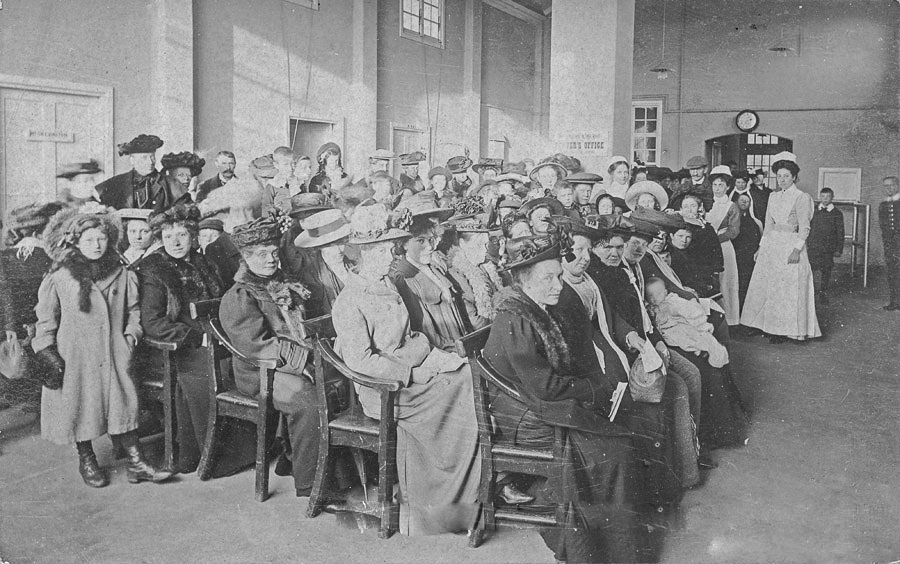
Dispensary patients were still being examined and treated in a very limited space, and now that the annual number of out-patients was over 4,000, Barry urged the Committee to provide an adequate Out-Patient Department. Internal alterations were made to provide a large airy waiting room adjacent to the Surgeons’ consulting room and the Dispensary. The alterations, including the new ward, cost £863. Barry subsequently donated a further £578, which together with the balance of his original £1,000, was invested to provide the salary of a special nurse for Barry Ward.
It was becoming increasingly obvious that the Infirmary was not large enough to cater for the growing population of Windsor and district. In 1902 the House Surgeon E. J. Manning reported to the Committee that patients were overcrowded in the wards, he gave them facts and measurements, and stated that he considered that this state of affairs was materially retarding the patients’ progress. He was supported in this contention by the senior staff. The Committee were reluctantly compelled to withdraw four beds, and to reduce the number of admissions, but more unfortunate perhaps was the fact that the bed complement would now be under forty, which was considered the minimum for a Training School for Nurses.
Permission had been sought from the Windsor Corporation to extend the Infirmary into Bachelors Acre, but the matter had not progressed further:
“Bachelor’s acre was suggested and all the that was necessary was a vote in favour at the council meeting. However, Sir Joseph Devereaux. Objected. The mayor said. Pardon me, Sir Joseph. It is too late to go into that now. I don’t think so, said Sir Joseph. Alderman Clark then produced photographs of the narrow passages onto the acre and claimed that it was the only playground that some poor children had. Once again the acre was saved, and not for the last time.”
It was proposed at the Annual General Meeting in 1904 that a special Committee should be appointed to consider the whole matter. This Committee rapidly came to the conclusion that any extension of the present building would not be satisfactory. It was decided to call a General Meeting of the Governors on 4th July in the Town Hall, at which the following proposals were put forward:
“That this meeting of Governors consider that it is desirable that the Infirmary be re-built on a new Site to meet the demands of Windsor and the district”.
“That a Site Committee . . . . . . be formed to select a suitable site for the new Building, and report to a meeting of Governors on September 27th, after which a subscription list shall be opened for the purchase of the said site”.
Signed: JOHN H. ELLISON, P. J. DE PARAVICINI, W. SHIPLEY, HENRY TOWER, ALBERT LEE.
The resolutions were carried unanimously.
A site opposite Combermere Barracks was finally decided upon, to which Prince Christian gave his support. The meeting of Governors in September approved this selection, and the Committee were authorised to negotiate for its purchase. The Mayor, William Shipley, who had been a member of the Weekly Board since 1900, was asked to open a fund for the purpose.
Due to Shipley’s untiring efforts the Fund rapidly rose to over £3,400, to which the King and the Royal Family had liberally contributed. The price to be paid for the site was £2,850, and at the adjourned Annual General Meeting on 6th April, 1905, the following resolutions were passed:
“That the draft agreement for the purchase of the land at the junction of St.Leonard’s and Frances roads having been approved by the Site Committee, they now be asked to complete the purchase in the names and on behalf of the proposed New Hospital, and not on behalf of the Governors of the Windsor and Eton Royal Dispensary and Infirmary.
“That H.R.H. Prince Christian of Schleswig-Holstein, K.G., Viscount Esher and Alexander William Shipley be appointed the Trustees to whom such land shall be conveyed for the purpose of the New Hospital”.
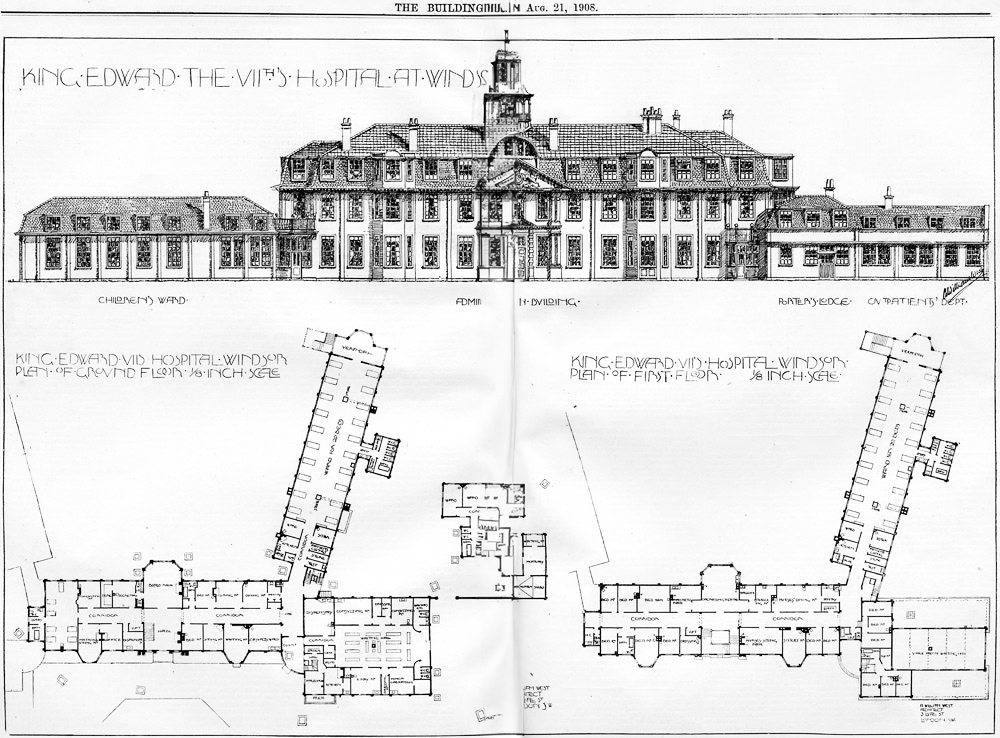
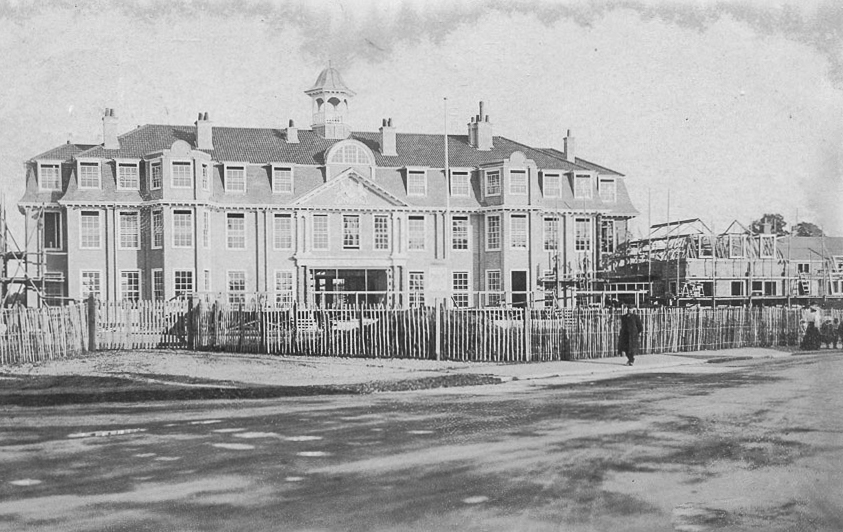
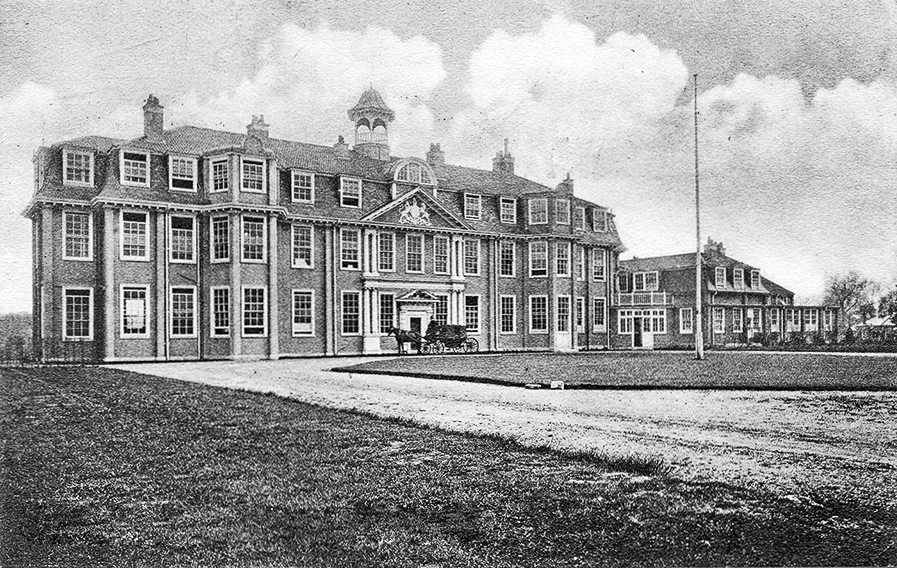
However, in 1907 it was resolved to amalgamate the two institutions, and at the same time it was decided to commence building the new Hospital, in the hope that it would be completed before the end of 1908. The King gave permission for it to be called “King Edward VII Hospital and Dispensary for Windsor, Eton & District”. Dispensary was dropped from the title in 1911.
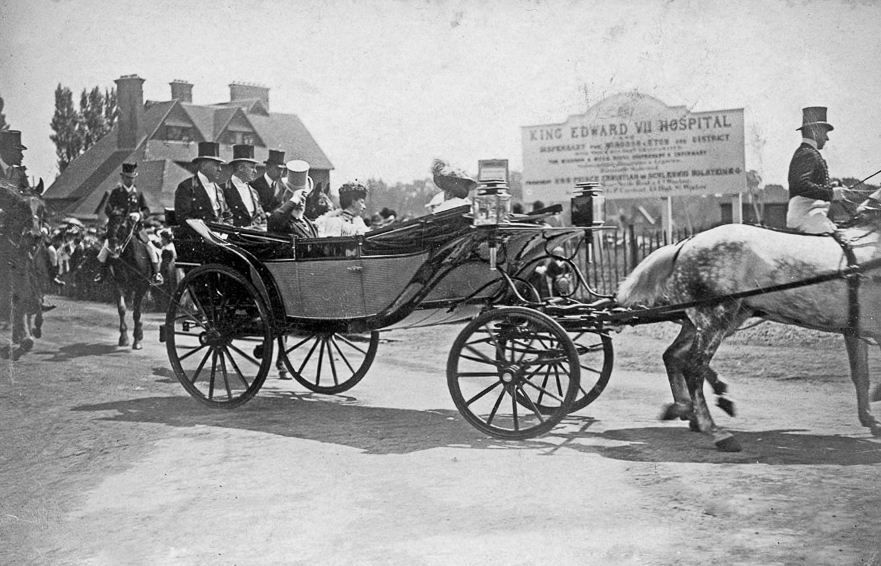
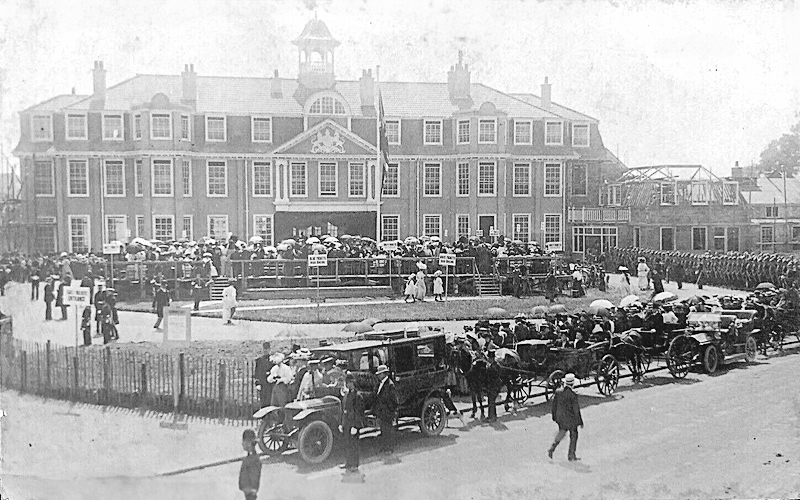
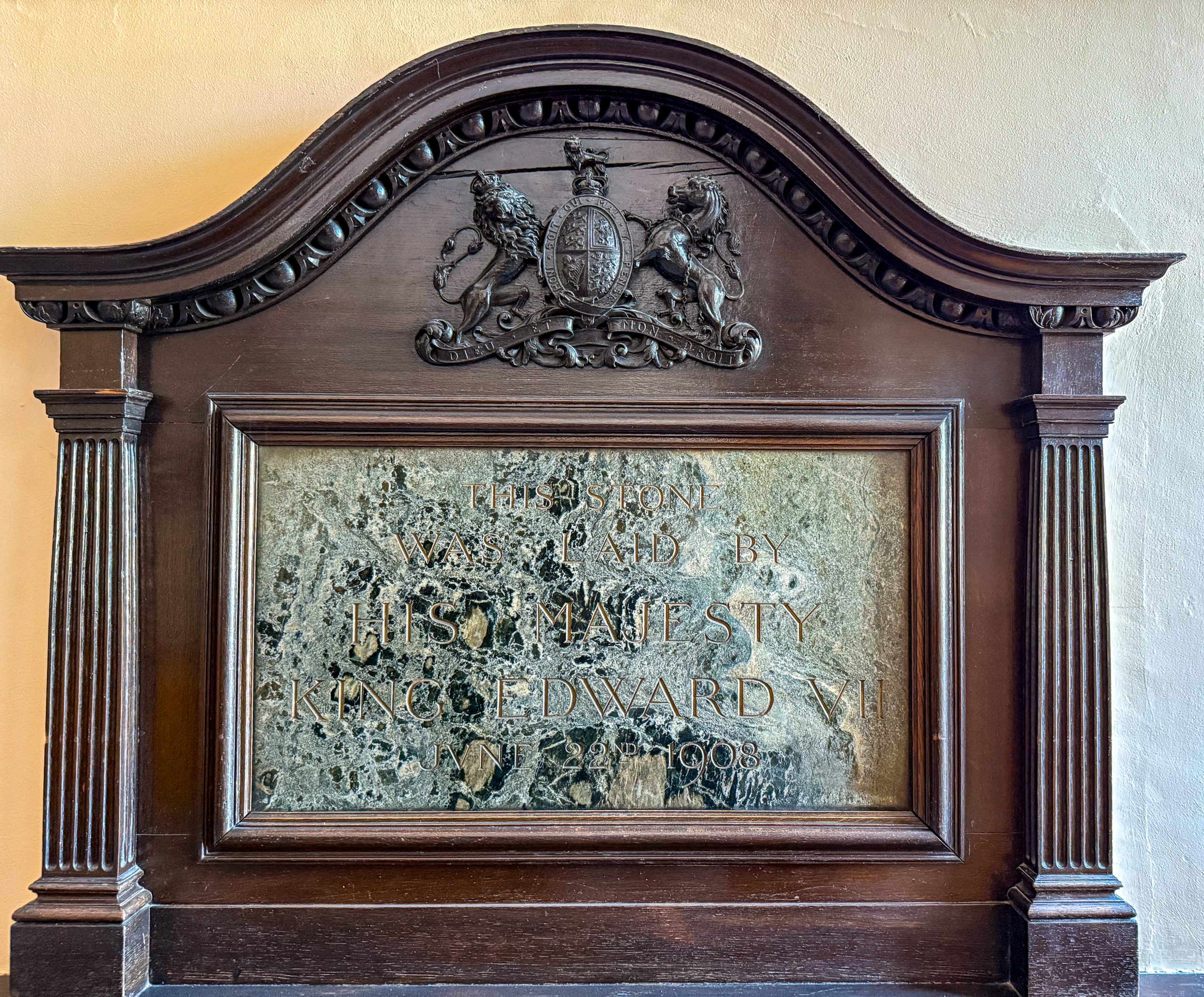
The Commemoration Stone of the new Hospital, made of Siberian marble, was laid by King Edward on Monday, 22nd June, 1908. He was accompanied by Queen Alexandra and Princess Victoria, and they were received by Prince and Princess Christian.
The Building Fund had by then reached nearly £13,000, of which 500 guineas was donated that day by Baron Schroder, a wealthy banker who lived in Windsor.
On Wednesday, 17th March, 1909, King Edward VII Hospital began its career. Almost unnoticed patients were transferred from the Old Infirmary. The next day the last Annual General Meeting of the Governors of the Windsor & Eton Royal Dispensary and Infirmary was held in the new Hospital. Prince Christian, the President, was unable to attend, and the Chair was taken by Mr. P. J. de Paravicini, Chairman of the Committee. The Dean of Windsor offered a special prayer for God’s blessing on the new Hospital. It was resolved that the amalgamation of the Dispensary & Infirmary and King Edward VII Hospital should now come into effect, and that the funds and properties of the former should be transferred to the Trustees of the new Hospital, viz: H.R.H. Prince Christian, Viscount Esher, Sir William Shipley, P. J. de Paravicini, Esq., the Rev. J. H. Ellison, and R. A. Bosanquet, Esq.
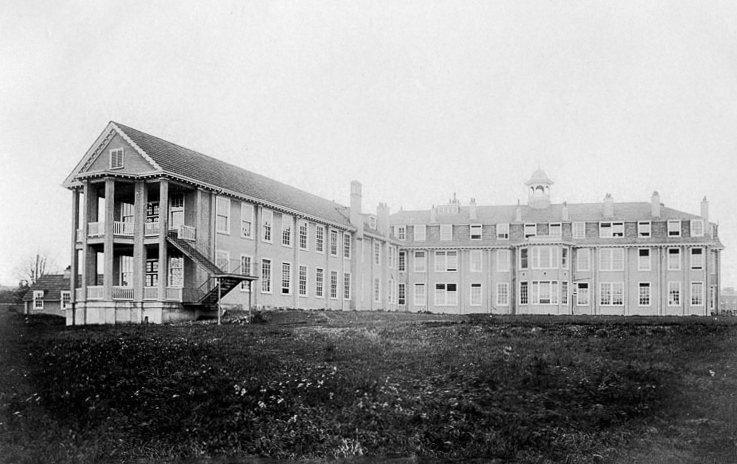
There were fifty beds in the Hospital. Permission was given for the two main wards on the West side of the building to be styled “King Edward’s Ward” for men, and “Queen Alexandra’s Ward” for women, while the children’s ward at the Eastern end was named “Helena Ward” after Princess Christian. Barry Ward was on the ground floor in readiness day and night for accident or emergency cases. Through the efforts of Dr. Hathaway a Horse Ambulance was acquired to bring such cases to the Hospital. The operating theatre was light and roomy, and contained the most modern equipment, much of which had been given by the Second Life Guards. From its opening the Out-patient Department felt the impact of an amazing increase of casualties, which by the end of the year had mounted to 6,105.
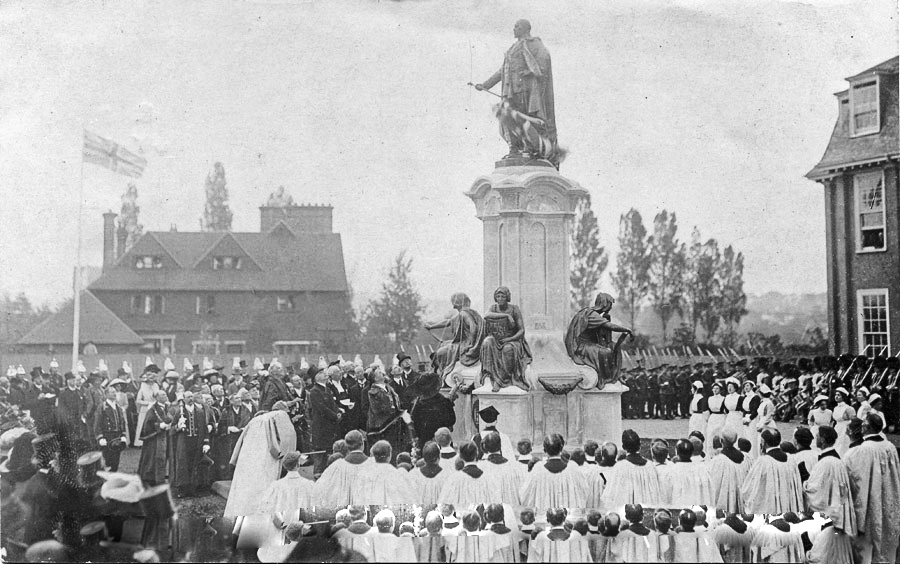
King Edward died suddenly after a short illness on 6th May, 1910. A public meeting was held at the Guildhall on 15th July under the Presidency of Prince Christian to launch a Memorial Fund to the late King, with the object of erecting a statue of him in front of the Hospital, and of paying off the debt on the Building Fund. The appeal was launched by Frederick Dyson, then Mayor of Windsor.
The sum of £10,250 was raised, of which £2,500 was given by Arthur William Mayo-Robson, who had been Professor of Surgery at the University of Leeds until 1902, when he resigned and settled in practice in London. His home at that time was at Moulsford-on-Thames. He was elected Hon. Consulting Surgeon to the Hospital in 1910. The fund eventually reached the figure of £11,000. The statue of the King was erected in the forecourt of the Hospital early in 1912, and was unveiled by the Mayor, Councillor Augustus Harris on behalf of King George on 29th April. The cost of the statue was £2,200, and it was designed by Countess Feodora Gleichen,* and was modelled by her in her studio at St. James’ Palace. The monument is composed of the statue of King Edward VII, around the base of which are four female figures representing Sympathy, Sagacity, Kindness and Cheerfulness. Nearly £7,000 was given to pay off the Building debt, and the balance of £1,500 handed to the Hospital for endowment purposes.
Although the annual income from subscriptions was less than the Committee had hoped, during the early years of the new Hospital several large donations were received. The most munificent was one of £5,000 given in 1912 by Mrs. James Elliman of Slough for the construction of a female surgical ward. When this was followed by another donation of £2,500 from Mayo-Robson for the purpose of enlarging the children’s ward, it was decided to embark on the building of a new wing at the eastern end of the Hospital. It was completed the following year with the new “Helena” ward containing sixteen cots on the ground floor, and above it “Mary Elliman” Ward of eight female beds, each of which could be curtained off from the next bed when necessary. The X ray and Electrical Department moved into the rooms which housed the original children’s ward. The cost of structural alterations was borne by Mrs. Elliman, and she also donated a further £400 for new equipment.
In 1910 a small building was erected at the west end of the hospital site to house the Pathological Department.
in 1918, when through the efforts of Sir William Shipley it became possible to purchase several acres at the rear of the Hospital compound. It was felt that the additional land would provide more garden produce, and allow for any further extensions.
The financial affairs of the Hospital obviously became more complicated during the war years. Payments were made by the War Office for the treatment of military personnel, and the sum for 1918 was no less than £7,441. The Hospital had also benefited by several large legacies, including £1,000 from Mrs. Elliman, who had died in 1917, and £3,317 from Miss A. M. Newman of Datchet in 1918. Nevertheless by the end of 1919 there was a deficit of over £3,000, and it was felt that this was largely due to the fact that the population of Windsor and district had risen from 17,000 before the War to 44,000. Early in 1920 a Subscription Committee was formed under the chairmanship of Sir John Soundy, who had been one of the Aldem Trustees for many years. The immediate need was to find means to reduce the deficit of £3,286, but the ultimate aim was to increase the annual income, which stood at only £1,577 from a mere 550 subscribers. The area which the Hospital serviced was subdivided into the various districts, and local representatives were appointed to organise subscriptions. One especially successful feature was to invite a small weekly subscription from working men and women, a penny from men and a halfpenny from women and young workers. This scheme came to yield a considerable revenue. By the end of 1920, £4,246 had been received, with expenses incurred of only £261.
It had been felt for some time that there was an urgent need of more satisfactory accommodation for the Nursing Staff, and it was given further impetus by the receipt of £1,000 from the British Red Cross Society for this purpose in December 1921. Earlier in the year a donation of £5,000 to the Hospital had been received from Sir Dhunjibhoy Bomanji, a wealthy Indian merchant whose country house was in the vicinity of Windsor, and from which it was suggested that an allocation should also be made.
The Committee decided to commemorate the services of Sir William Shipley to the Hospital by a Memorial Fund to promote the scheme for a Nurses’ Hostel, and to the money already obtained over £2,000 was received from the Windsor War Memorial Fund. An appeal was officially launched at a special meeting at the Guildhall on 12th April, 1922, at which the Prince of Wales presided.
By the end of 1923, some £7,000 had been contributed, and building was commended in the following February, on a site adjoining the south-eastern corner of the Hospital. The foundation stone was laid by Queen Mary on 5th April, and the completed wing was opened by the Prince of Wales on 25th November. In the corridor leading to the new Hostel memorials were unveiled to Sir William Shipley, and to the men of Windsor killed in the 1914-1918 War.
The Hostel provided thirty bedrooms, two sitting-rooms and other facilities for the nursing staff. It was obvious from the remarks made by Mr. James Railton, Chairman of the Building Committee, that if in the future further accommodation was made available, the new building could be readily converted to form another wing of the Hospital.
In 1923 King Edward VII Hospital became one of the first hospitals in the provinces to take a special interest in the administration of insulin, which at first was very costly, so that only a limited number of patients could be accepted for treatment. This experimental work was one of the factors causing a great increase in the work of the Pathology Department, as numerous estimations of blood sugar were necessary. A medical committee was accordingly formed to co-ordinate the work of this department with that in the wards and out-patient department. It was realised that the laboratory would soon be too small to deal with the increasing volume of work, but fortunately Dr. Elgood now had the assistance of E. C. Malden, who had been appointed Assistant Pathologist in October 1921.
Another step in the development of the Hospital was the provision of “Paying Wards”. On the opening of the Nurses’ Hostel the accommodation vacated in the main building was converted into ten private rooms. These facilities were available to such patients who were prepared to pay a charge of four to six guineas a week.
It was not long before the need for some more general beds became apparent. Plans were approved for building a new ward adjacent to the southern end of the Nurses’ Hostel. It was completed in the Spring of 1927, and was officially opened by King George and Queen Mary on 20th April. The ward, for male patients, was to be known as King George V Wing. The cost was largely met by a legacy of over £6,000 from the estate of Mr. W. A. Sammes of Windsor.
Other improvements which took place about this time included an electric lift to replace the hand-lift brought from the old Infirmary. The cost of the new lift in the main hall was borne by Sir James Gomer Berry. Also installed at the expense of Mr. E. C. Mumford of Datchet was the necessary apparatus for X-Ray therapy of skin conditions, and cases of malignant disease. Another need was met by the provision of a small labour ward for abnormal obstetric cases. After delivery patients returned to the main ward.
On the afternoon of Tuesday, 24th April, 1928, a defective flue in the roof above Alexandra Ward caught fire. As the area was inaccessible the fire had gained a firm hold before the arrival of the local Fire Brigade. As soon as the outbreak was discovered evacuation of the threatened wards began, and within fifteen minutes every patient had been moved to safety. Queen Alexandra and King Edward Wards were completely destroyed. At one time it was feared that the whole building might be endangered, but by six o’clock the fire was under control. The Hospital staff were greatly assisted by soldiers from Combermere Barracks, and the Commanding Officer allowed the Military Hospital, which was empty at the time, to be used for the reception of many of the evacuated patients. By dusk the forecourt of the Hospital was full of salvaged furniture, bedding and equipment. Within two weeks three temporary wards had been erected in the Hospital grounds and two were already in use.
Misfortune brought not only the promise of rebuilding the two wards, but plans for further extension of the Hospital. An Extension Committee had in fact been formed earlier in the year, with Sir James Gomer-Berry as Chairman and Joseph Skevington as Vice-Chairman. Its main concern had been the enlarging of the Out-patient Department, but it was also recommended that a new Nurses’ Home be built in the Hospital grounds, and that the existing Hostel be converted into a new ward, a number of the rooms to be used to provide additional paying wards. A new operating theatre and a new boiler house had also been suggested. These recommendations were accepted by the General Committee, and at a special meeting held only five days before the fire, it was agreed “to give the Extension Committee an absolutely free hand to take whatever steps they think advisable to raise the funds required for the extension of the Hospital, also to commence any building, or accept any contract that in their opinion is necessary.”
Under the militant leadership of Gomer Berry, later Lord Kemsley the programme was expanded to include the rebuilding of the burnt-out wards. Such was the vigour with which the Committee attacked their task, that early in the following year not only had this wing been rebuilt but another storey had been added, giving a third ward which was named “Queen Mary Ward”. Open-air balconies were provided at the end of each ward. In the basement a central boiler house was built to produce the heating and hot water throughout the entire Hospital.
It was announced in December 1928 that Sir James Gomer Berry and his brother Lord Camrose had offered £11,000 and £10,000 respectively for building the new Nurses’ Home in memory of Lady Gomer Berry who had recently died. The site chosen was on the land purchased by the foresight of Sir William Shipley. The building was completed and occupied by the end of 1929. It provided a very handsome home for the Nursing Staff, and is at present being extended to give further accommodation.
The erection of the new Home freed the right wing of the Hospital to be used for patients. Most of the individual rooms were adapted as paying wards, bringing the total to twenty-five. A further extension of the first floor was constructed over George V Ward, providing another small ward, which could be used alternatively for male or female beds as the demand arose. The cost of this ward was borne by Sir Edward Stern, a wealthy merchant banker of Carlton House Terrace, Slough.
It was not found possible to undertake any large scale alteration of the Out-patient Department, but some re-arrangement and extensions were made, as well as the provision of a new canteen. The cost of the entire building programme was £55,000, of which £7,000 was still required in February 1930.
During 1930 the old Infirmary building in Bachelors Acre was sold for £2,800 to the Windsor Liberal Club. The money was used, with the assent of the Charity Commissioners, towards the purchase of Ewhurst House, which was previously the home of Mr. E. Harrow Ryde, with nearly an acre of land adjoining the Hospital compound. The Pathological Department was allocated most of the spacious ground floor. The largest room was utilised as a lecture room for Nurses. The old pathological building at the other side of the Hospital, was converted soon afterwards into a Hospital Chapel. The altar piece was given by Miss Morris, the Matron, the chairs were gifts from the Nursing Staff, and all other fittings were donated by friends of the Hospital. The chapel was dedicated to St. Peter, and consecrated on 20th May, 1931, by the Lord Bishop of Buckingham.
An important addition during the year to the Hospital’s facilities was the construction of a second operating theatre, the need for which had been felt for some considerable time. It was equipped by Joseph Skevington and his brother Major Skevington in memory of their sister Maud. About the same time the X-Ray Department was enlarged by the movement of the administrative offices from the right side of the main corridor to their present site.
On the 5th July, 1948 King Edward VII Hospital was incorporated in the National Health Service, and became one of the hospitals under the administration of the Windsor Group Hospital Management Committee. The Hospital remained under Royal patronage, with the Duke of Gloucester as its President, but, it may well have been felt, in a rather impersonal manner. It is therefore pleasing to record the visit on the 2nd April, 1959 of Queen Elizabeth II on the occasion of the golden jubilee of the present hospital. It was the first visit by a reigning sovereign since that made by King George V with Queen Mary in April, 1932.